
We’ve all spent the last two years "talking" to computers. We ask ChatGPT for a meal plan, we argue with Claude about a coding bug, and we try to get Gemini to summarize an email we’re too lazy to read. It’s fine, but it’s still just… talking.
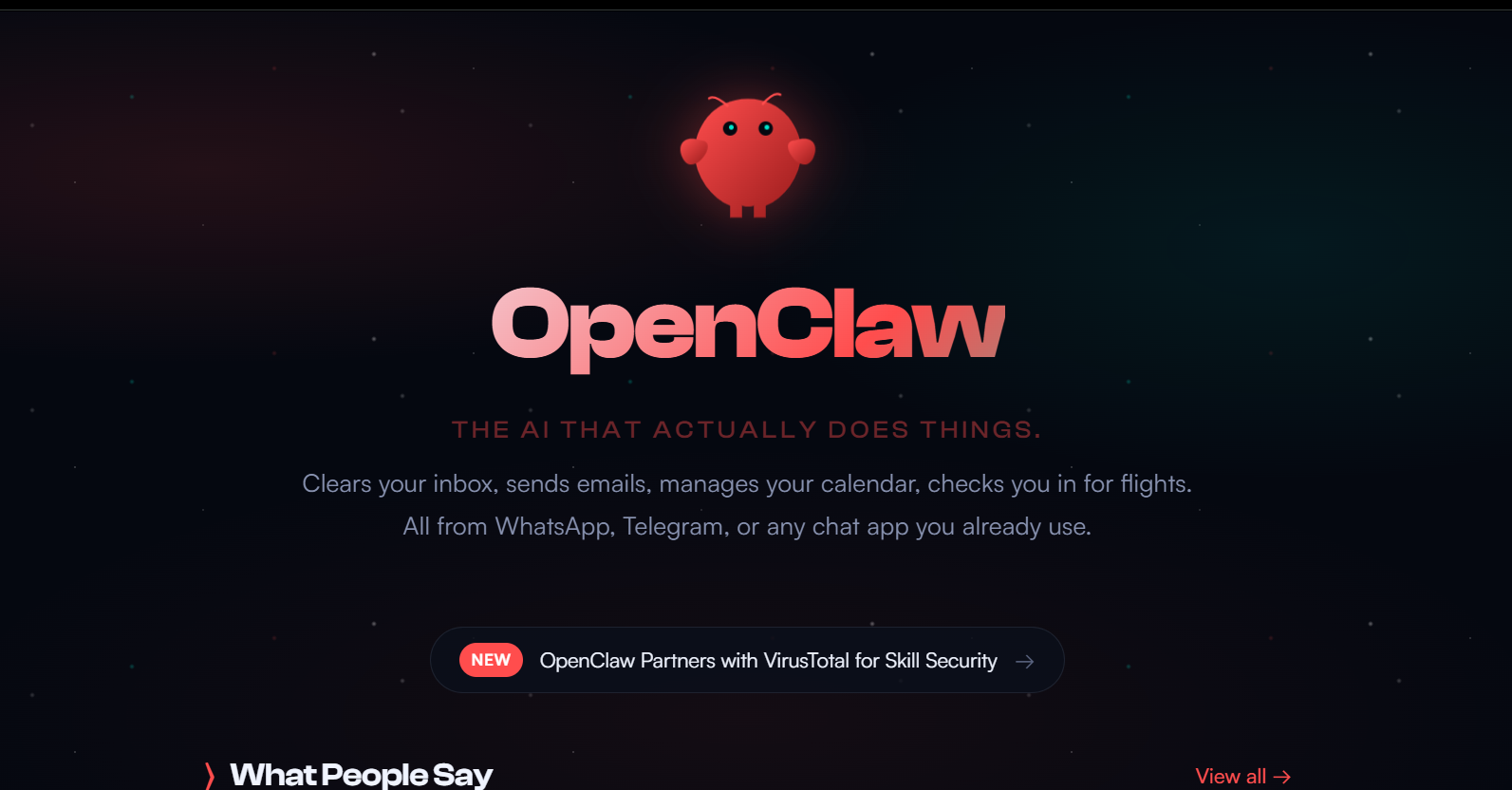
But lately, things have started to feel different. A quiet shift is happening where the AI is finally stopping the small talk and actually getting its hands dirty. If you’ve spent any time on GitHub lately, you’ve probably seen the name OpenClaw everywhere.
In about two months, this thing went from a weekend experiment to a technical phenomenon with over 100,000 stars. It’s not a chatbot. It’s an "agent"—a piece of software that has the keys to your computer and isn’t afraid to use them.
The Weird History of the Name
First off, we have to talk about the name, because it’s a mess.
If you look up OpenClaw, you might find a C++ project dedicated to making a 1997 platformer called Captain Claw run on modern PCs. That is not what the hype is about.
The current viral project started its life as "Clawdbot," a cheeky nod to Anthropic’s Claude. Then Anthropic’s lawyers sent a very polite "please don't," so it became "Moltbot"—a metaphor for lobsters shedding their shells. Finally, it settled on OpenClaw. It’s a weird legacy, but it fits the chaotic, move-fast-and-break-things energy of the project.
It’s All About "The Brain" and "The Hands"
The reason OpenClaw feels like a breakthrough isn't because the AI is "smarter"—it’s because of the plumbing. Most AI is trapped in a browser tab. OpenClaw runs as a persistent "daemon" on your actual machine.
The community talks about the architecture in two parts: the Brain and the Hands.
The "Brain" is the reasoning engine. You can plug in various models, but the heavy hitters usually go for GLM-4.7 or the latest Claude 3.7 Sonnet. This is the part that thinks through a problem.
The "Hands" are what make people nervous (and excited). OpenClaw has the authority to poke around your files, run shell commands, and open a browser to do things for you. It doesn’t just suggest code; it writes the file, runs it, sees that it crashed, and fixes it. It’s like having a very fast, very focused intern who lives in your terminal.
Dealing with the "AI Dementia" Problem
If you use ChatGPT enough, you know the frustration of re-explaining who you are and how you like to work every single time you open a new chat. OpenClaw tries to fix this with a single file called soul.md.
This is basically the agent’s long-term memory. It’s where it stores your preferences, your project structures, and even your quirks. If you tell it once that you hate a specific library or prefer a certain tone in your emails, it actually remembers.
The goal is to move away from "one-off" interactions and toward a relationship where the bot gets more "senior" the longer you work together.
What Does This Actually Look Like in the Wild?
The use cases aren't just theoretical anymore. People are using these agents to handle the "boring" parts of being a human in 2026.
I’ve seen developers use it to manage entire podcast guest workflows—finding people, emailing them, negotiating times, and putting it on the calendar—all while the human was asleep.
In the startup world, founders are using it to build features for their own apps. Because OpenClaw can see the whole codebase and run a terminal, you can give it a high-level goal and just watch the commits start rolling in.
"OpenClaw isn't just a tool; it's a preview of a future where governance matters more than the prompts themselves." — CloudBees
The Reality Check: It’s Expensive and Kinda Scary
Now, let's be real. OpenClaw isn't for everyone yet. There are some massive hurdles that the hype usually skips over.
The Cost: These agents work in "loops." They try something, fail, and try again. Each loop costs API tokens. A simple task can easily run you $0.50. If the bot gets stuck in a logic loop, it can burn through your budget before you’ve even finished your coffee.
The Hardware: To run a decent local "Brain," you need a monster of a PC. We're talking 64GB of RAM minimum. People are literally buying Mac Minis just to give this thing a place to live.
The Security: You are giving a script full access to your computer. Security researchers at Blackbird.AI are already pointing out that this is a playground for hackers. One bad prompt injection and your whole system belongs to someone else.
How to Actually Get It Running
If you’re technically inclined, you can self-host. You’ll need Node.js 22 and a bit of patience for YAML files. It’s a bit of a headache, but it means you own your data.
For everyone else, managed services like MyClaw.ai or BayClaw have popped up. They basically give you a "sandbox" version of OpenClaw in the cloud for a daily fee. It’s safer for your local files, even if it feels a bit less like "Iron Man’s Jarvis."
The Bottom Line
We’re in the "dial-up" era of AI agents. It’s clunky, it’s expensive, and it sometimes breaks in spectacular ways.
But the direction is clear. We’re moving away from a world where we use tools and toward a world where we manage them. OpenClaw is the first big, messy, open-source bridge to that future. The lobster has molted, and whether we're ready for it or not, the 24/7 proactive workforce is starting its shift.