MachinoAI Research
AI Research, Decoded.
AI paper explainers with methods, results, limitations, and links to original sources. Browse every published explainer or explore foundation architectures in our Models Directory.YouTube
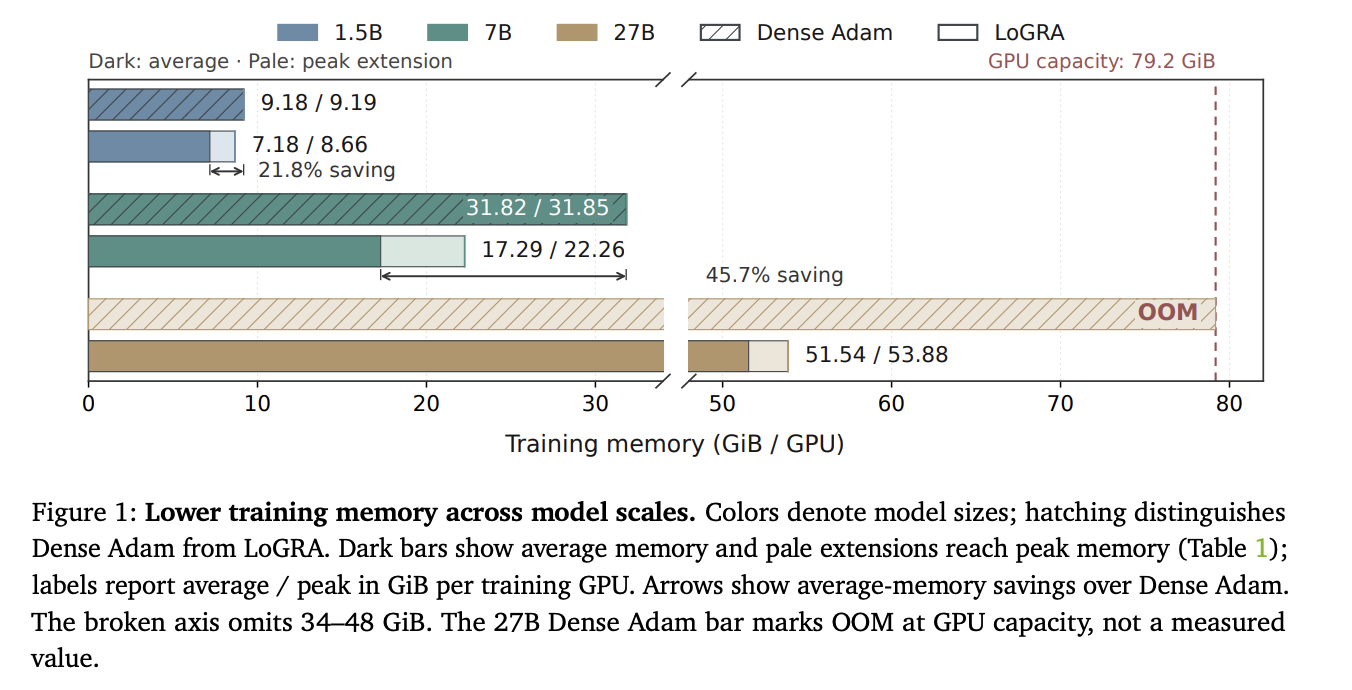
LoGRA: Scaling LLM Reinforcement Learning with Low-Rank Gradient Sketches
LoGRA compresses the learning signal used during LLM reinforcement learning into low-rank gradient sketches and controls update size with a predicted-KL budget.
Why it matters: RL post-training for reasoning models is memory-intensive because the system must hold model weights, activations, gradients, optimizer states and rollout infrastructure. LoGRA offers a systems-level alternative to full-gradient Adam: preserve a compact low-rank representation of the learning signal, update the model through that representation, and transmit the same compact update to the rollout workers. It is important because memory reductions can change which model sizes are trainable on a fixed GPU cluster. The paper also provides a useful case study in evaluating compression methods honestly: memory, accuracy, throughput, policy drift and feasibility must be reported separately.
Library
Latest research
Structured explanations for papers, models, methods, and concepts.
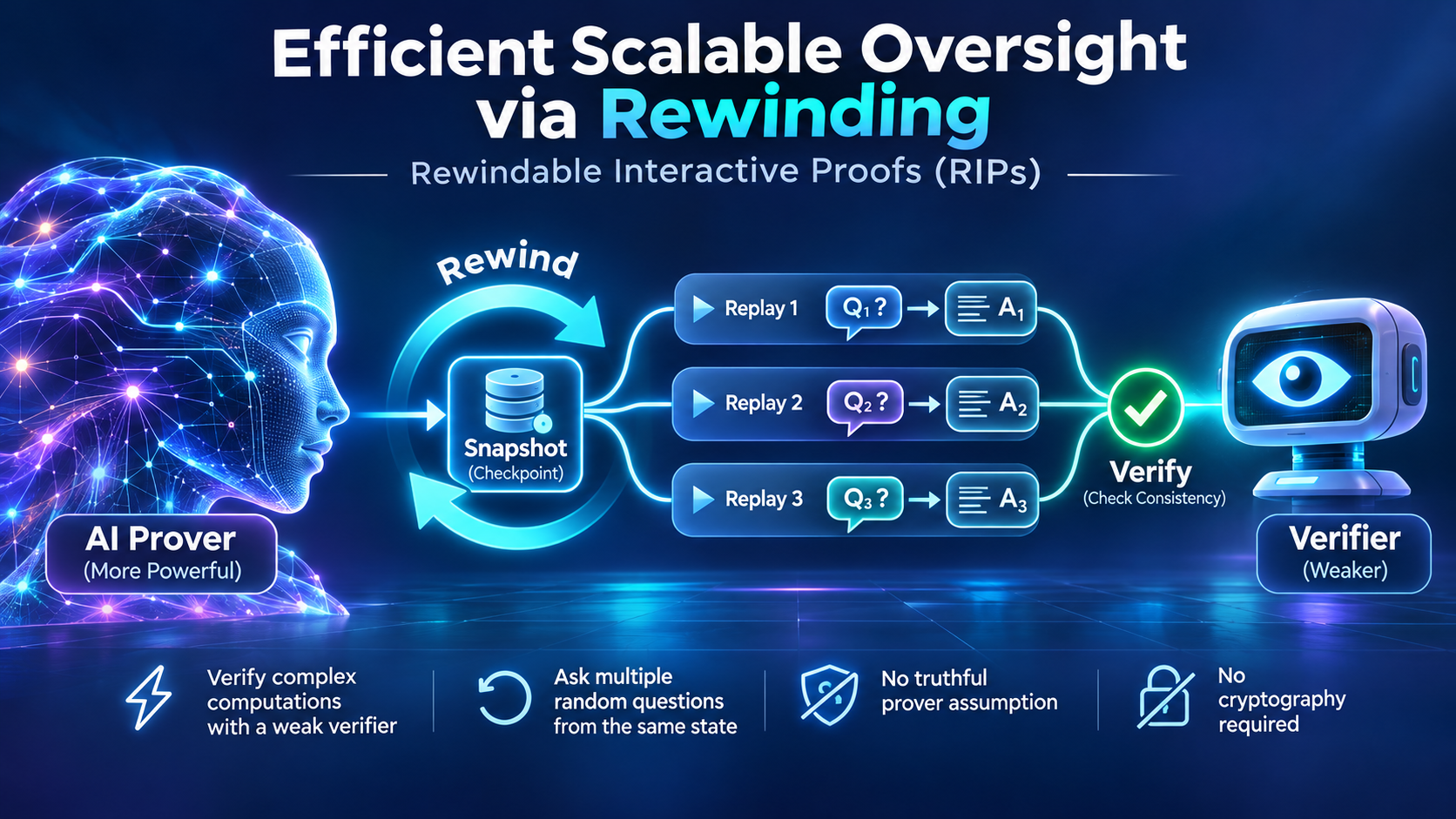
Efficient Scalable Oversight via Rewinding
New proof-system model for scalable AI oversight: checkpoint and rewind the prover to verify robust oracle computations with no cryptography and no truthful-prover assumption.
Read this for a deep treatment of scalable oversight, interactive proof systems, oracle robustness, verifier soundness, checkpointed AI execution and the gap between theoretical guarantees and deployable AI verification.
Ziyi Guan, Yael Tauman Kalai, Ron Rothblum · Oct 29, 2026
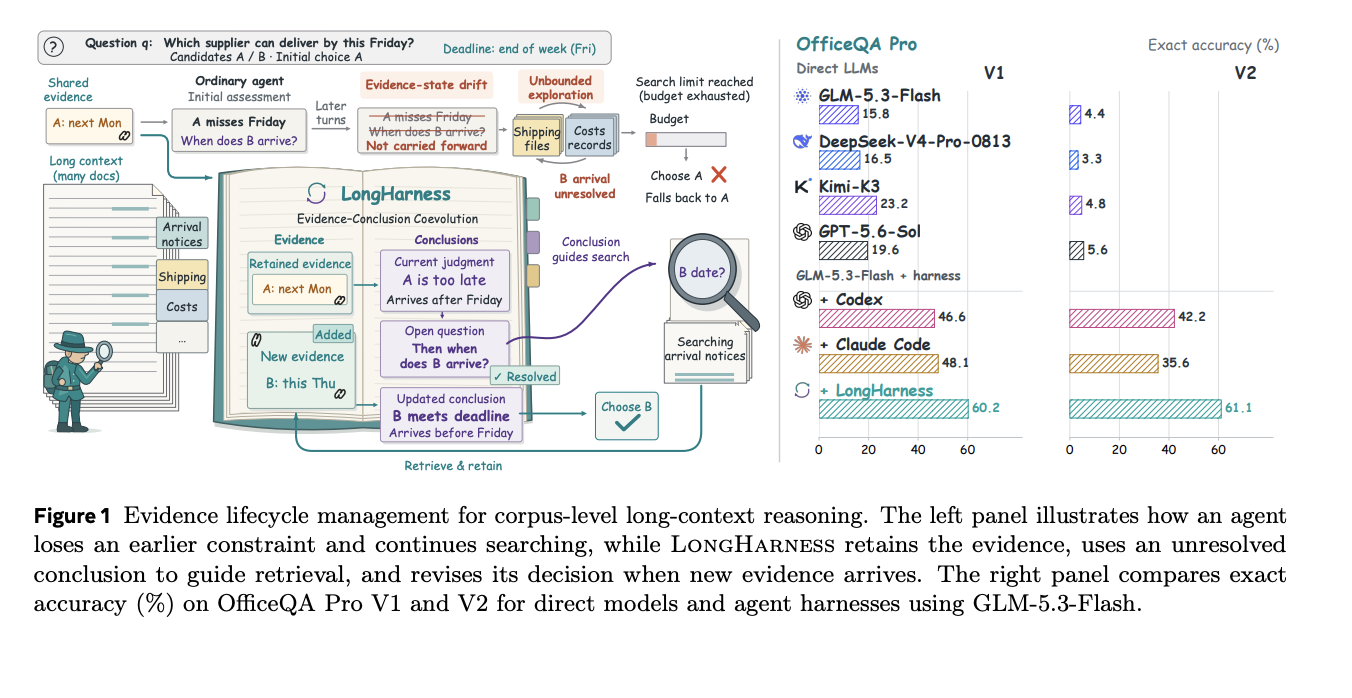
LongHarness
A stateful agent harness that couples source-linked evidence with evolving conclusions to improve grounded reasoning over document corpora exceeding 100 million tokens.
Read this to understand how to build reliable corpus-scale agents with explicit evidence state, conclusion tracking, source provenance, revision semantics and targeted retrieval rather than relying on a growing chat transcript.
Songtao Huang, Zhijie Zhong, Xiaohan He · Oct 9, 2026
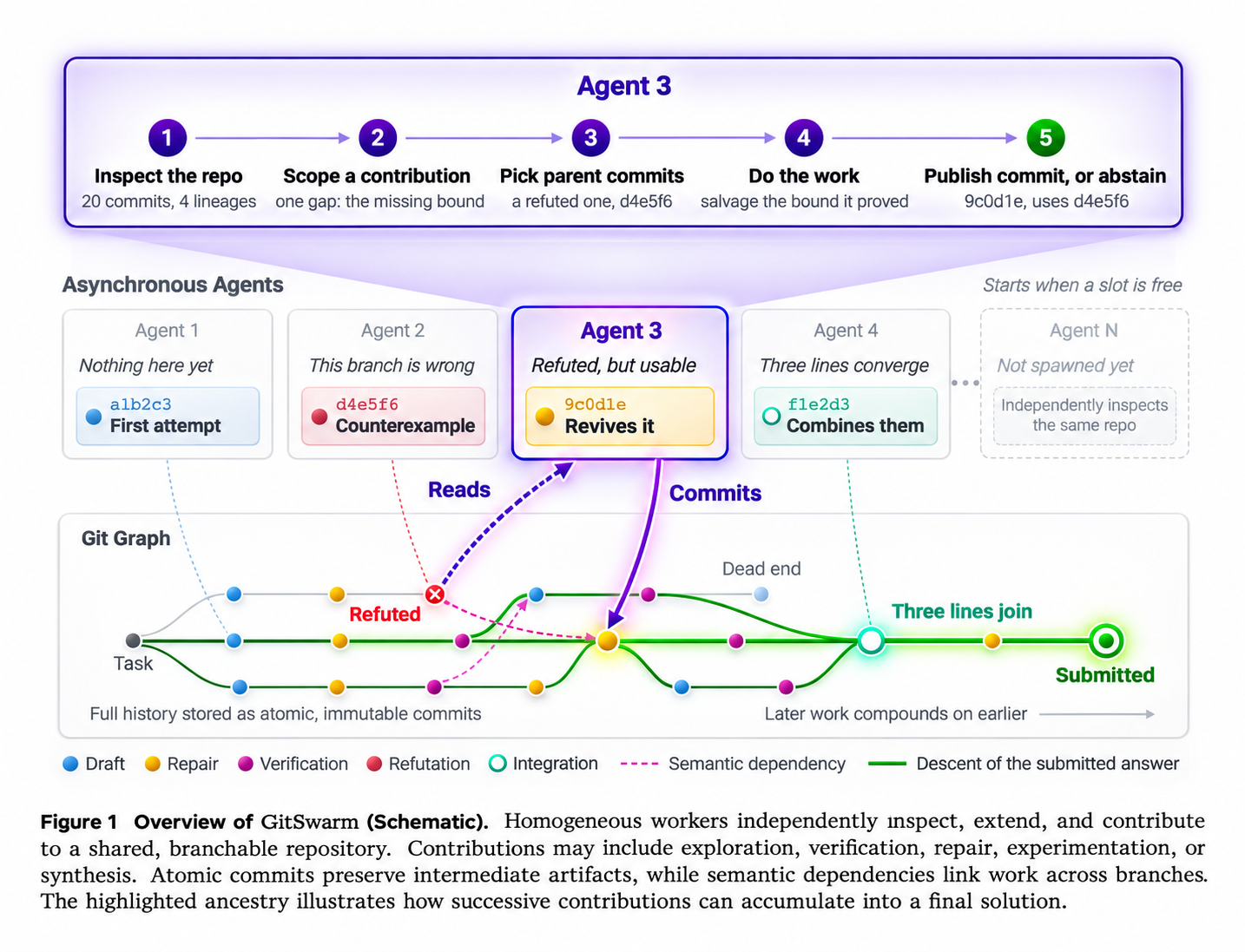
GitSwarm
An asynchronous multi-agent system that uses a shared Git repository as persistent memory, enabling agents to reuse successful work and failed experiments across long-horizon tasks.
Read this to understand a practical architecture for persistent multi-agent collaboration, including Git worktrees, semantic dependency graphs, decentralized candidate selection, artifact reuse and the costs of scaling agent swarms.
Vedant Shah, Ankur Samanta, Paras Dahal · Oct 4, 2026
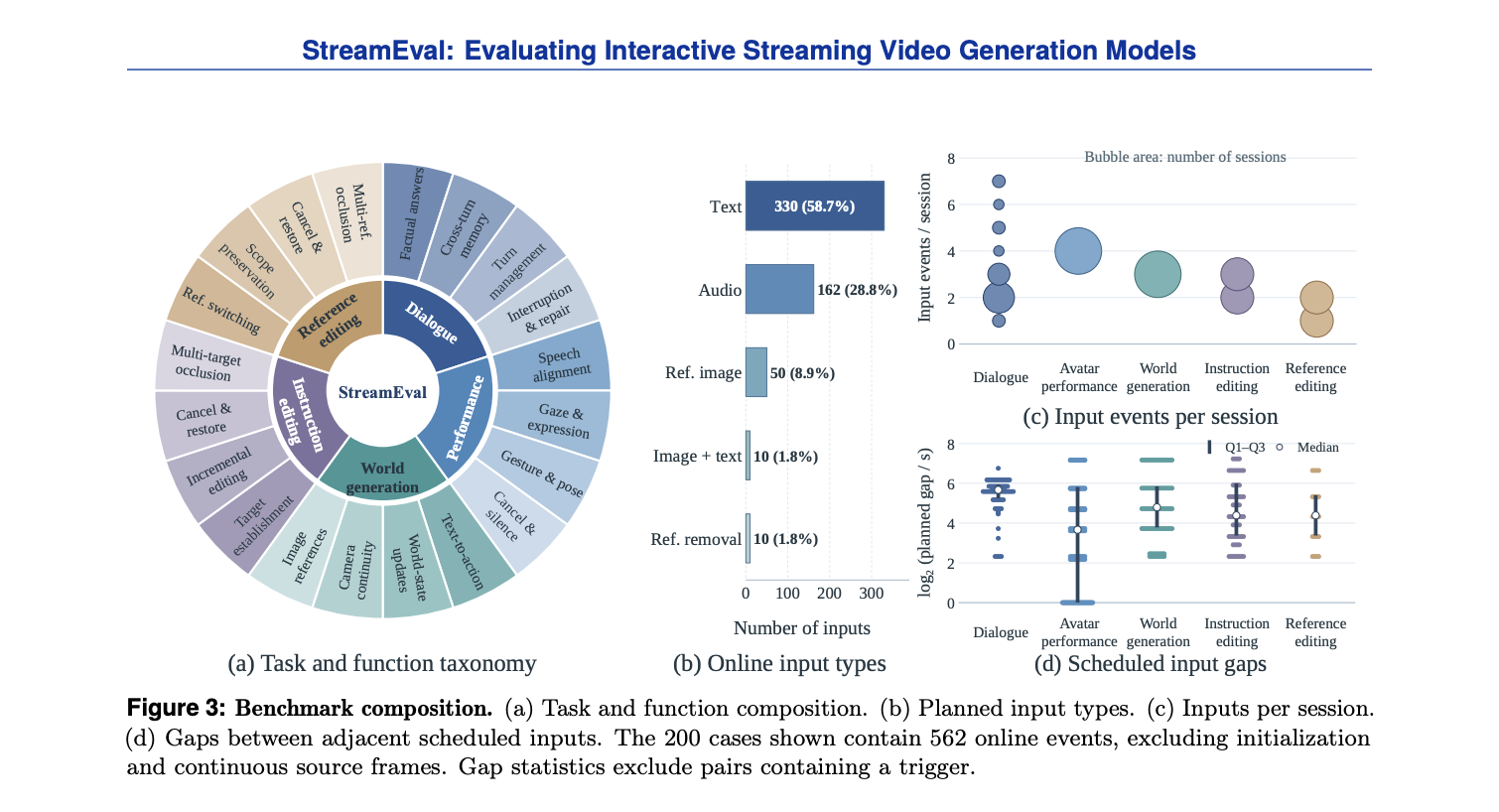
StreamEval
An interactive streaming-video benchmark revealing the gap between visual quality and reliable real-time instruction following across avatars, world generation and video editing.
Read this to understand how to evaluate real-time multimodal products beyond frame quality: control following, state preservation, temporal continuity, audiovisual synchronization and long-horizon reliability.
StreamEval Team · Oct 20, 2026
Gemini 4 Carbon
A technical reading of Gemini 4 Carbon: coding and agentic claims, security benchmarks, safety measures, availability, and what developers should verify.
AI engineers, security researchers, and engineering leaders evaluating long-horizon coding agents and AI-assisted security workflows.
Google DeepMind · Oct 28, 2026
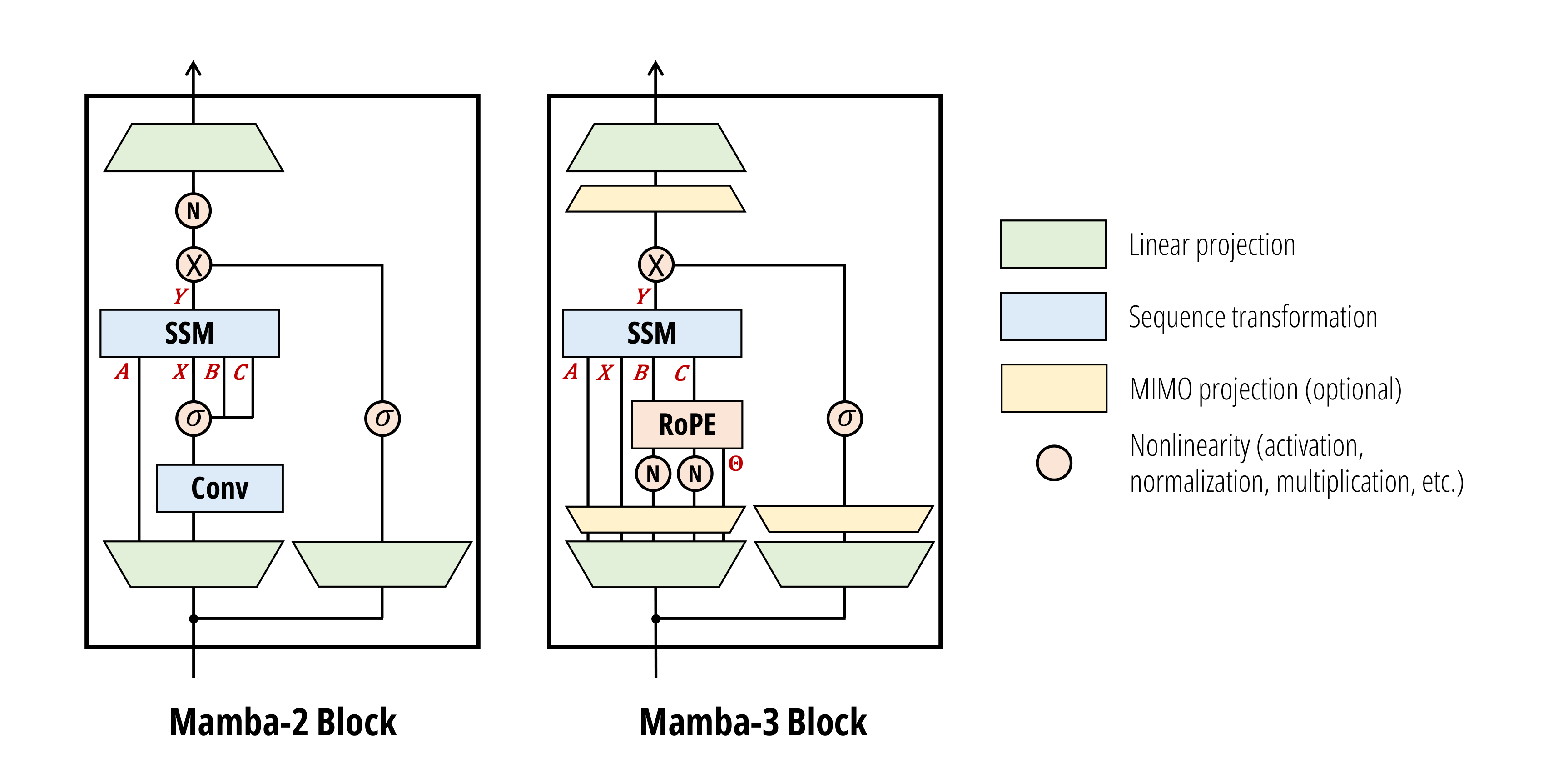
Mamba-3: Efficient State Space Models
Research deep dive into Mamba-3: recurrence, complex state updates, MIMO, benchmark results, official code, and engineering trade-offs.
ML engineers and researchers evaluating efficient recurrent architectures, long-context inference, and alternatives to Transformer attention.
Aakash Lahoti, Kevin Y. Li, Berlin Chen · Mar 16, 2026
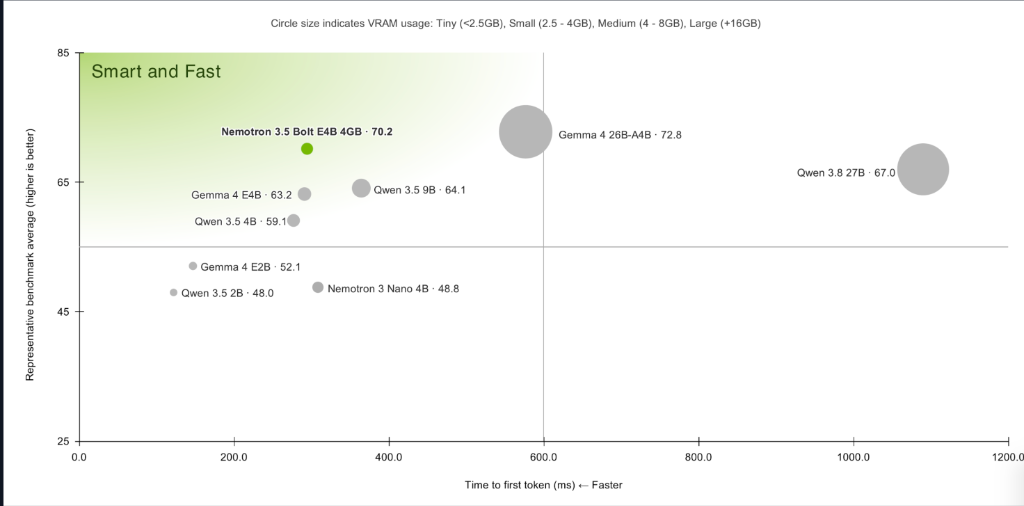
Nemotron Bolt E4B 4GB
Technical guide to NVIDIA's compact local-agent model: model lineage, quantization, benchmark interpretation, hardware measurements, tool-calling architecture, and practical deployment guidance.
Developers building local voice agents, interactive NPCs, or embedded AI systems who need to understand memory, latency, tool execution, and deployment trade-offs.
NVIDIA · Oct 23, 2026
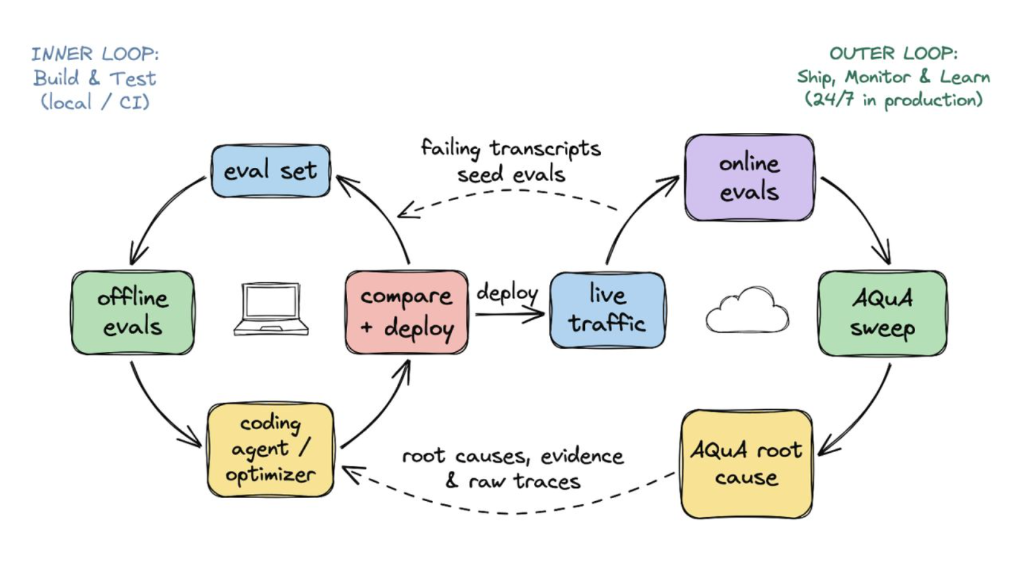
Ambient Quality Agent (AQuA)
A practical guide to production agent quality: trace sampling, multi-stage evaluation, root-cause clustering, code-aware investigation, and a continuous improvement loop.
Read this if you build multi-agent systems and need to detect semantic regressions that ordinary uptime and latency monitoring miss.
Google ADK Recipes contributors
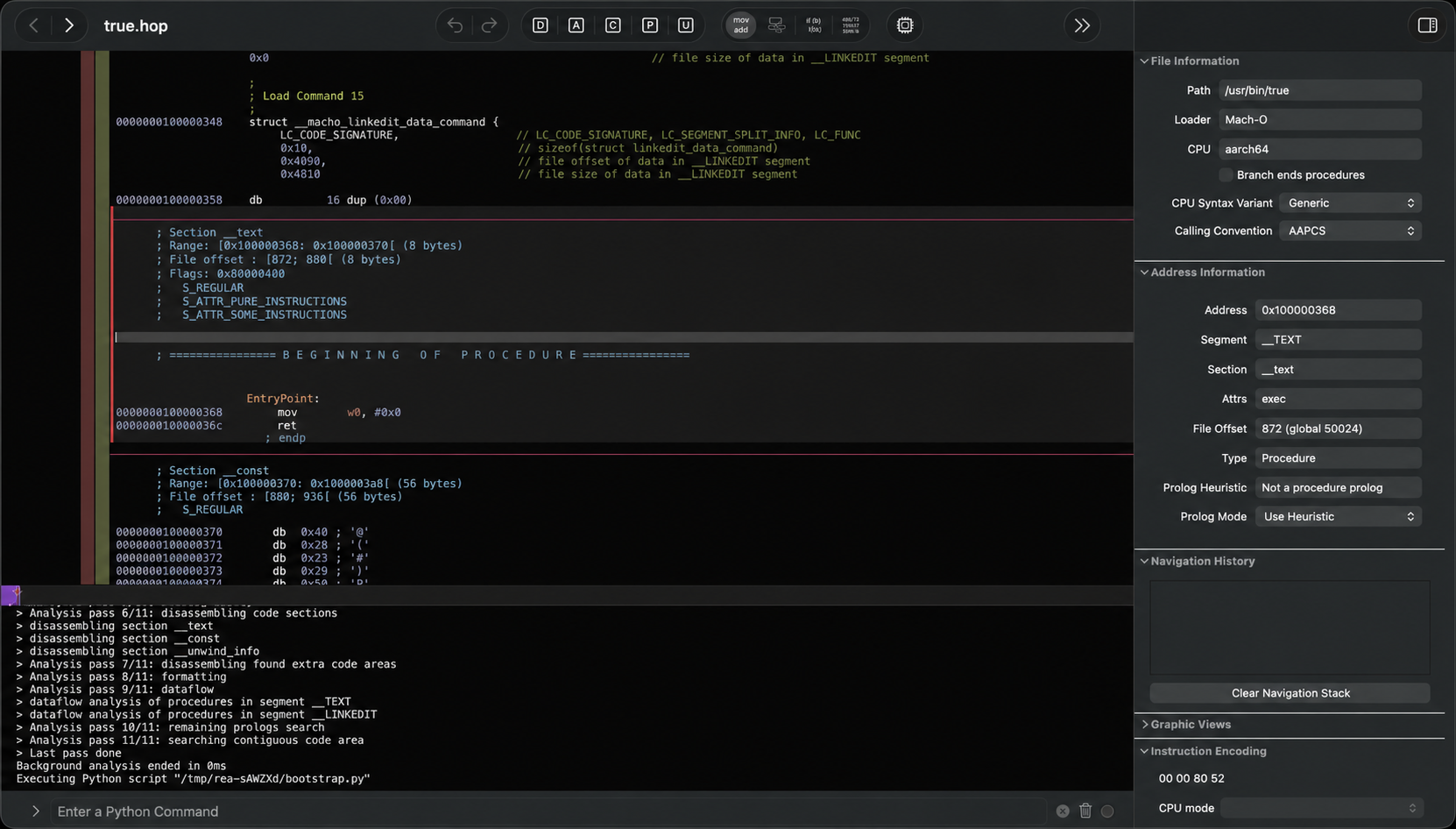
Reverse Engineer Anything: Practical Guide
A hands-on guide to REA with CLI/MCP commands, Python and TypeScript examples, a full feature-tracing lab, production runbooks, and evidence-based benchmark analysis.
Use this as a practical learning path: start with static analysis, run a focused investigation, build a replacement with differential tests, and learn where AI reverse-engineering agents still fail.
MachinoAI Research Desk
Signals
Worth reading next
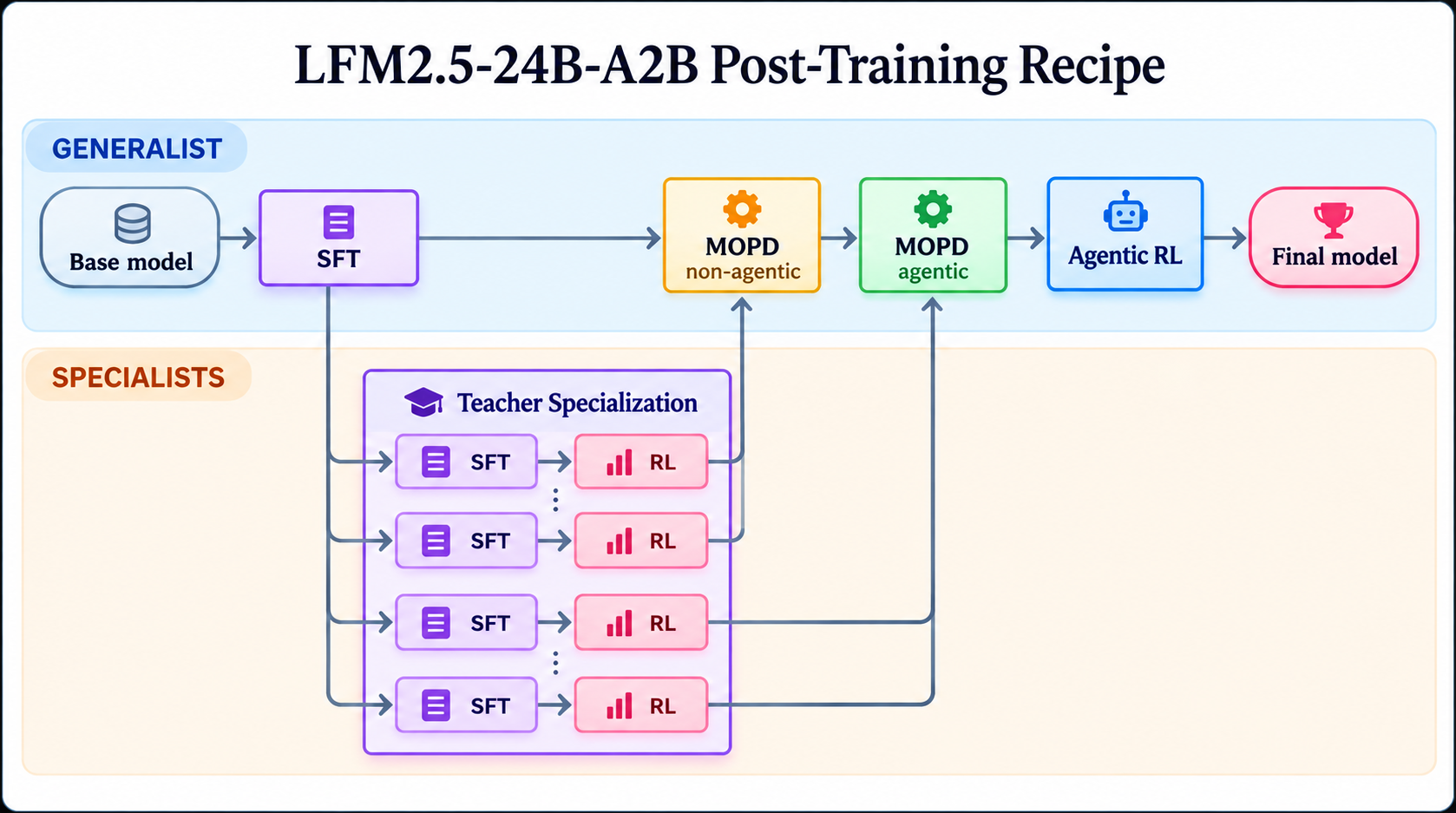
LFM2.5-24B-A2B
LFM2.5-24B-A2B is a 24B-parameter hybrid MoE reasoning model with low active compute, a 131K context window, and training optimized for local tool-using agents.
Useful for AI engineers building local agents: study its MoE architecture, tool-use benchmarks, deployment speed, licensing, and reward-hacking lessons.
Liquid AI · Oct 13, 2026
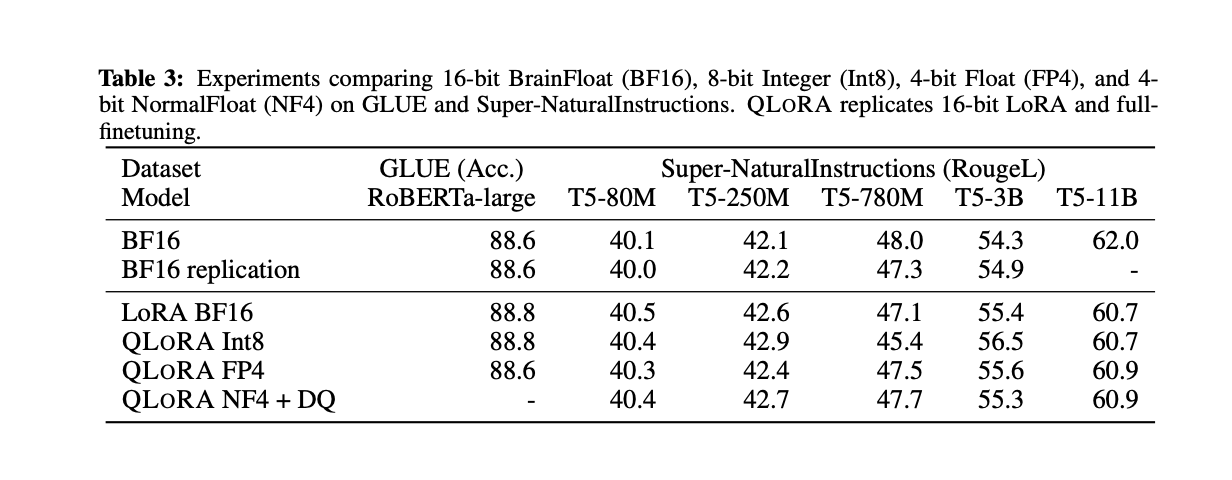
QLoRA
QLoRA combines 4-bit NF4 quantization with LoRA adapters to fine-tune very large language models under a single-GPU memory budget.
Essential for understanding modern 4-bit fine-tuning: NF4, double quantization, paged optimizers, LoRA, memory accounting, and evaluation.
Tim Dettmers, Artidoro Pagnoni, Ari Holtzman · May 23, 2023
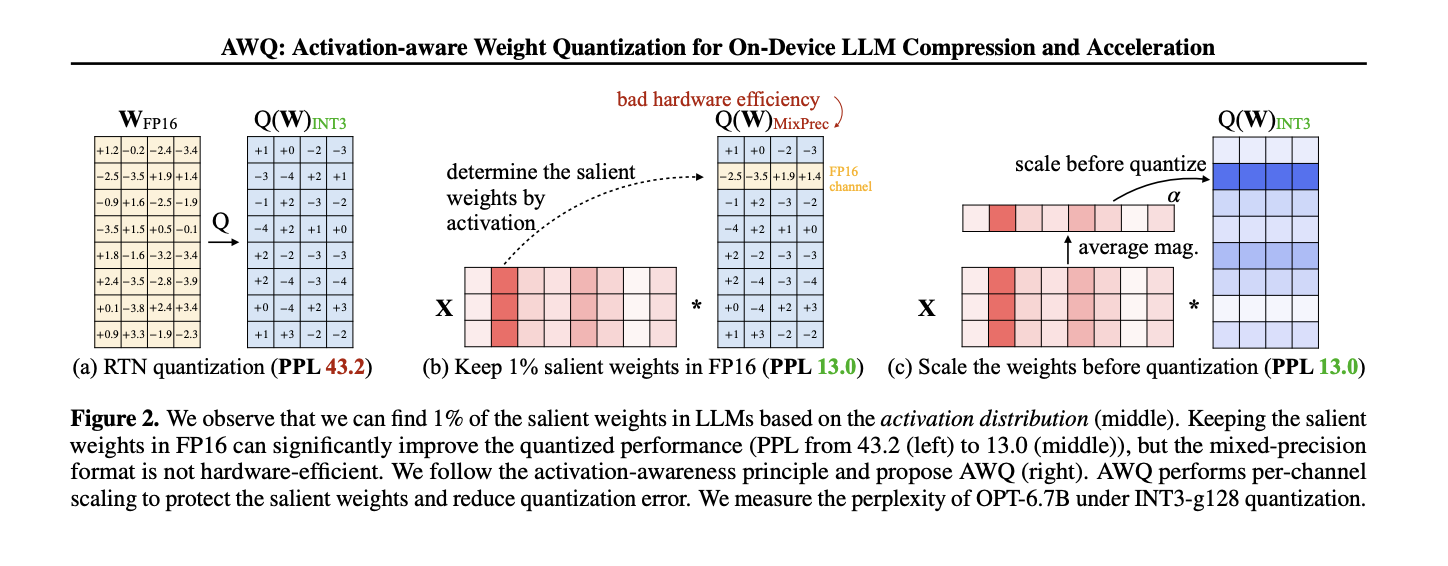
AWQ
AWQ uses activation statistics to identify salient weight channels and scale them before low-bit weight-only quantization, preserving accuracy while enabling hardware-efficient LLM inference.
A foundational low-bit quantization paper that connects activation statistics, quantization error, hardware efficiency, calibration robustness, and edge inference.
Ji Lin, Jiaming Tang, Haotian Tang · Jun 1, 2023
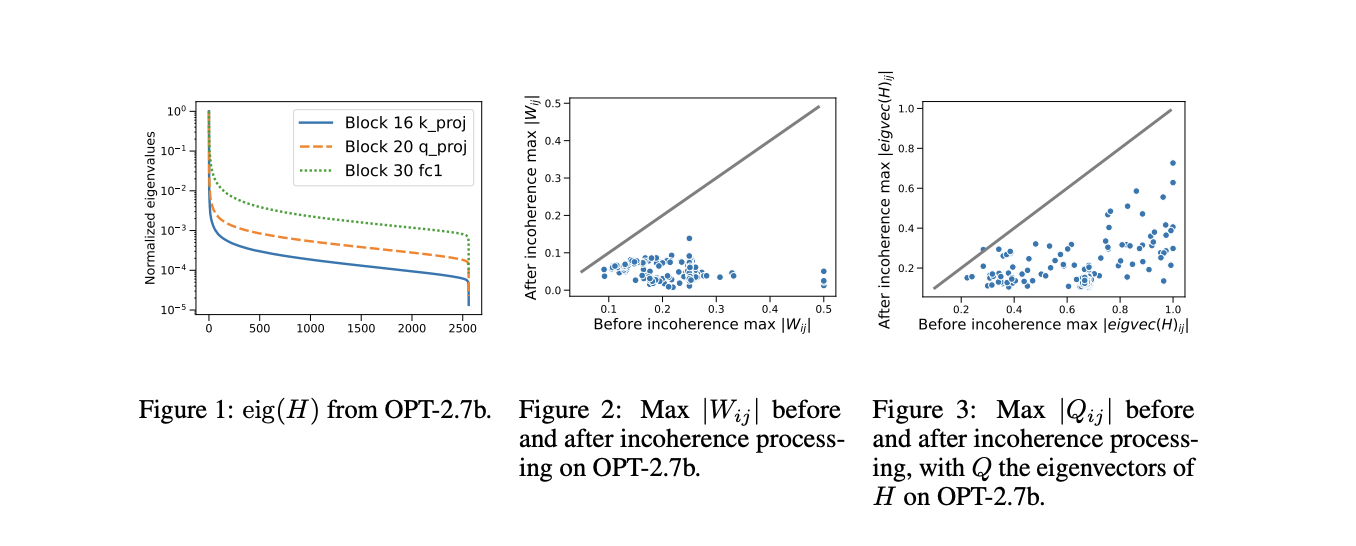
QuIP
QuIP makes two-bit post-training quantization viable for large language models by combining adaptive rounding with incoherence processing.
Essential for understanding why incoherence and second-order information enable accurate 2-bit LLM quantization.
Jerry Chee, Yaohui Cai, Volodymyr Kuleshov · Jul 25, 2023
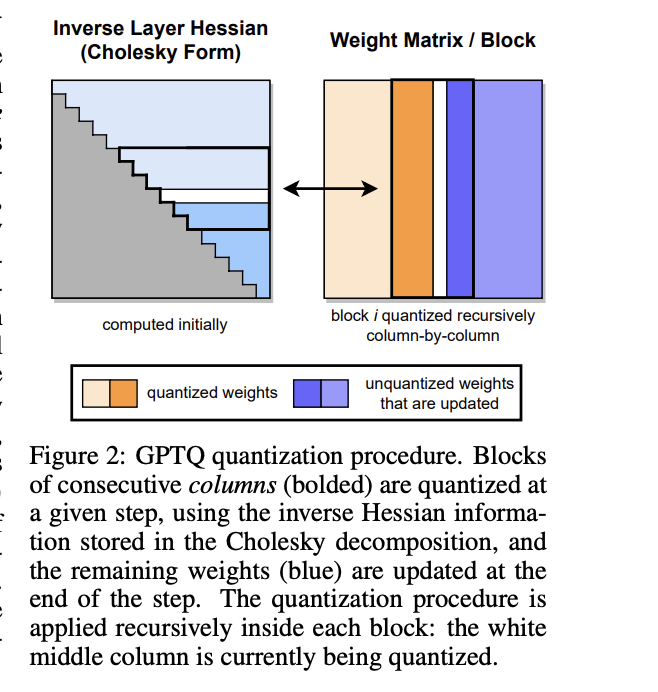
GPTQ
A one-shot, approximate second-order post-training quantization method that compresses 175B-scale language models to 3–4 bits with minimal accuracy loss.
Essential for understanding modern weight-only PTQ: Hessian-aware error compensation, 3–4 bit compression, group size trade-offs, and memory-bandwidth-limited LLM inference.
Elias Frantar, Saleh Ashkboos, Torsten Hoefler · Oct 31, 2022
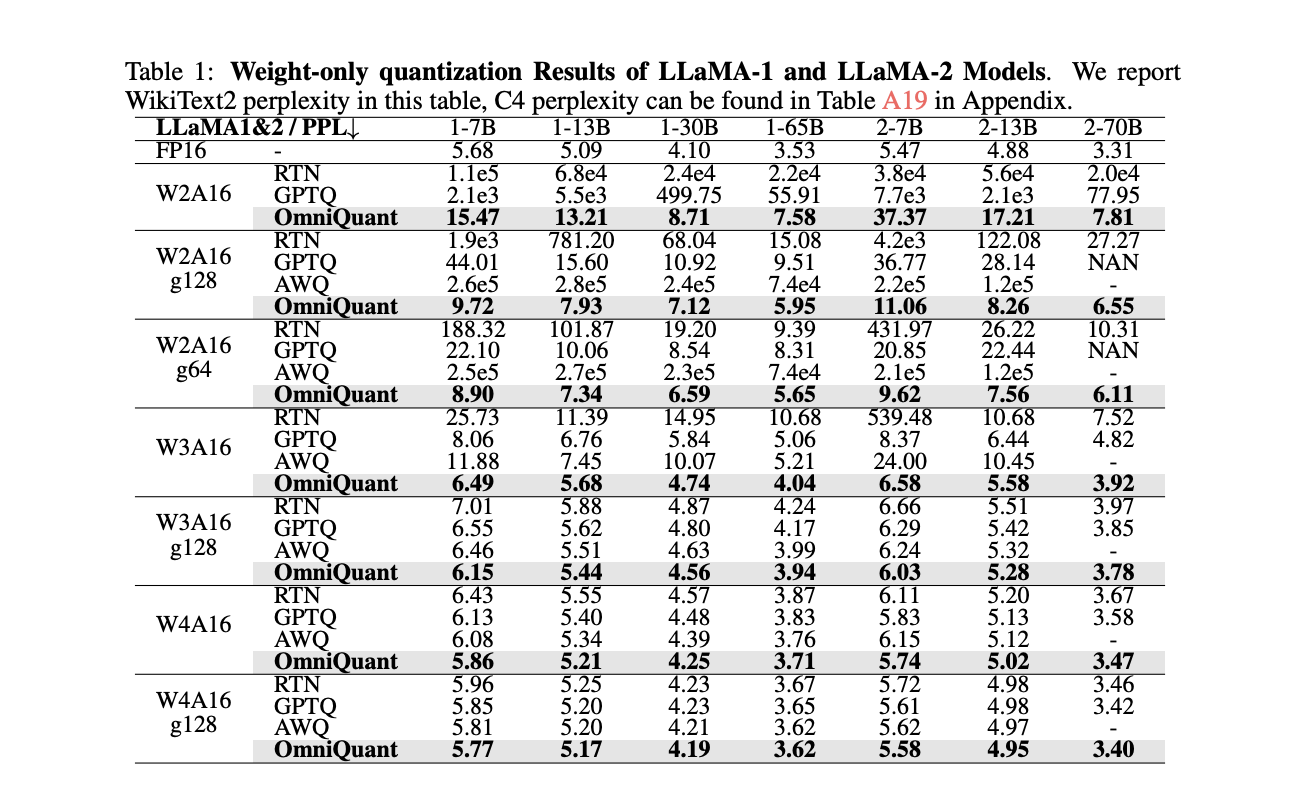
OmniQuant
OmniQuant makes PTQ parameters learnable through Learnable Weight Clipping and Learnable Equivalent Transformation, supporting both weight-only and weight-activation LLM quantization.
Essential for understanding learnable PTQ, LWC, LET, block-wise reconstruction, W2A16, W4A4, and modern low-bit calibration.
Wenqi Shao, Mengzhao Chen, Zhaoyang Zhang · Aug 25, 2023
What AI Research Does MachinoAI Cover?
RAG & Retrieval Research
Retrieval-Augmented Generation (RAG) papers covering dense retrieval, hybrid search, chunk strategies, re-ranking, and advanced RAG architectures like HyDE, RAPTOR, and Self-RAG. Each explainer includes methods, results, and implementation takeaways.
AI Agents & Reasoning
Research on autonomous AI agents — ReAct, Toolformer, chain-of-thought prompting, tree-of-thought, multi-agent coordination, and RLHF alignment techniques. Covering both the original papers and practical engineering implications.
Transformer Architectures
Deep dives into the attention mechanism, positional encoding, MoE routing, FlashAttention, GQA/MQA, and the architectural innovations in GPT-4, Gemini, Claude, and Llama model families. Diagrams, formulas, and benchmark results included.