
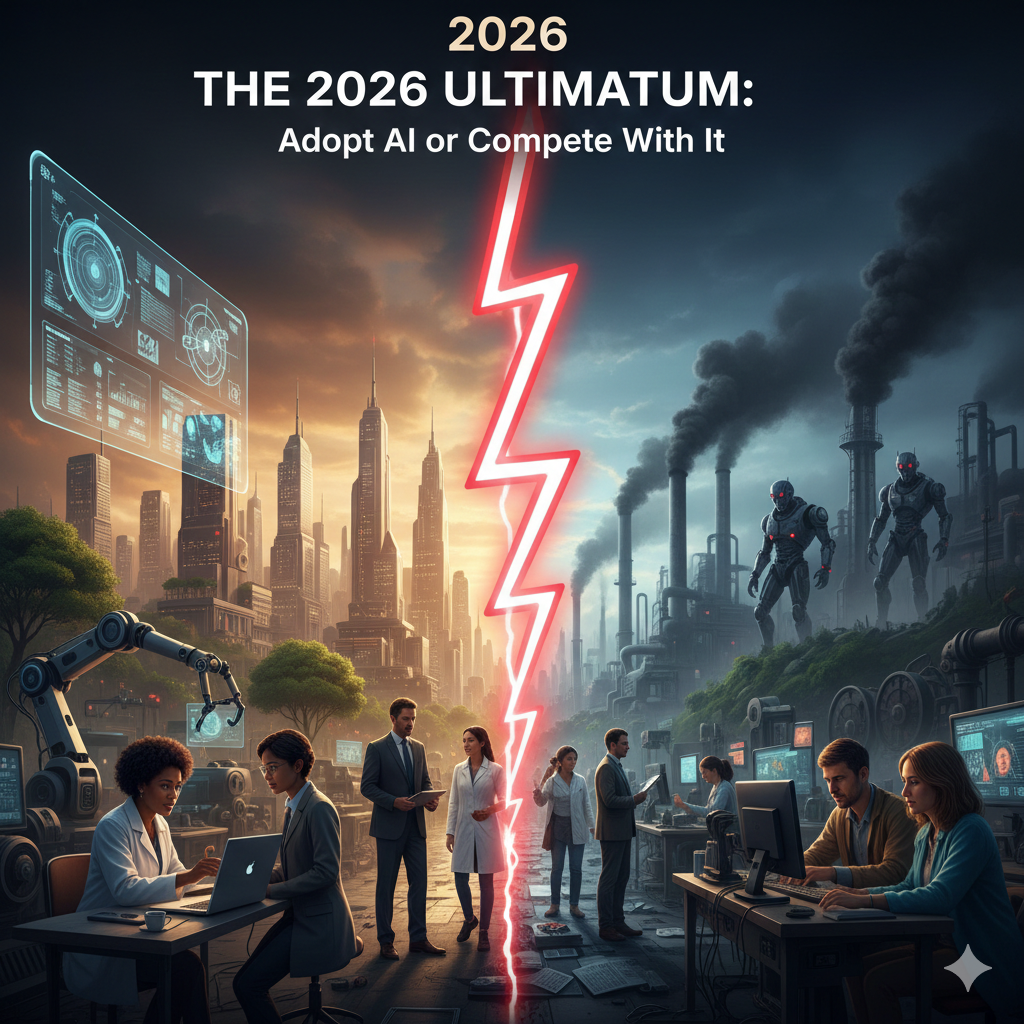
Standing in the plenary hall of The Hindu Tech Summit 2026, the air wasn’t just filled with the hum of high-end projectors; it was thick with the realization that the grace period for AI experimentation is officially over. We are no longer debating whether AI will change our jobs—we are deciding whether we will be the ones holding the reins or the ones being outpaced by them.
The theme, "Adopt AI or Compete With It," isn't just a catchy marketing slogan for a conference. It’s a stark reflection of a world that has seen more technological transformation in the last eighteen months than in the previous eighteen years.
The Ghost of 2025: Why Everything Changed
To understand the urgency of this year’s summit, we have to look back at the tactical shifts that occurred during the regional security crises of 2025. The conflict codenamed Operation Sindoor served as a global case study for what happens when legacy systems meet AI-integrated intelligence.
It wasn’t just about hardware like the 114 Rafale jets or the P-8I surveillance aircraft; it was about the software layers that synthesized data in milliseconds. Those who had integrated AI into their decision-making loops moved at a speed that left traditional command structures paralyzed and reactive.
The boardroom is now facing its own version of that battlefield. Companies that treated AI as a "side project" in 2024 are now finding themselves competing against startups that operate with 10% of the headcount and 100x the speed of iteration.
The Shift from Generative to Agentic AI
One of the most profound takeaways from the summit’s technical sessions was the transition from "Generative AI" to "Agentic AI." In 2023, we were impressed by a chatbot that could write an email; in 2026, we are deploying agents that can autonomously manage a supply chain, negotiate with vendors, and optimize a marketing budget without human intervention.
This shift changes the "Adopt or Compete" calculus. To "adopt" now means more than just using a tool; it means redesigning your entire organizational architecture to support autonomous agents.
If you choose to "compete" with AI—meaning you rely solely on human-centric processes—you are essentially trying to outrun a high-speed train on a bicycle. You might feel more "authentic," but you will ultimately be irrelevant in a market that demands instantaneous responses and hyper-personalization.
The Workforce Paradox: The Great Reskilling
The discussion on labor was perhaps the most provocative part of the summit. Experts argued that the "middle-management squeeze" has reached its peak as AI takes over the coordination and reporting functions that once required thousands of man-hours.
However, the tone wasn't entirely dystopian. Speakers from the NITI Aayog and global tech giants suggested that the value of "human-in-the-loop" intuition has actually increased.
We are seeing a new class of "AI Orchestrators"—professionals who don't necessarily code but know how to chain together complex AI models to solve business problems. These are the people who have chosen to adopt, and their market value is currently skyrocketing while traditional roles stagnate.
Sovereign AI and the Global Tech Trade
A recurring theme at the summit was the rise of "Sovereign AI." Following the recent India-US trade negotiations, it has become clear that data sovereignty is no longer just a policy talking point; it is a competitive necessity.
The ₹3.6 lakh crore defense push recently cleared by the DAC isn't just about planes; it’s about building a domestic AI ecosystem that doesn't rely on foreign cloud providers. This trend is trickling down to the private sector, where large Indian conglomerates are building their own private LLMs (Large Language Models) to protect intellectual property.
If you are a business leader, the question is no longer just "Which AI do I use?" but "Where does my AI live and who owns its weights?" Competing with a rival who has a sovereign, proprietary data advantage is a losing game from the start.
Actionable Strategy: The Three-Layer Approach
For those looking to move from the "Compete" column to the "Adopt" column, the summit provided a clear framework. Success in 2026 requires a focus on infrastructure, integration, and intuition.
Building the Infrastructure
The first layer is technical debt. You cannot run 2026 AI agents on 2016 data structures. Many organizations are failing because their data is still siloed in legacy ERP systems that AI agents cannot "read."
Cleaning your data isn't a glamorous task, but it is the prerequisite for adoption. Without a unified data fabric, your AI efforts will remain performative rather than transformative.
Deep Integration Over Surface Usage
The second layer is moving past the "ChatGPT window." Adoption means integrating AI into your APIs, your customer touchpoints, and your internal workflows.
Think of AI as electricity; you don't "use" electricity in a separate room, you wire it into every wall of the house. If your employees have to go to a separate tab to use AI, you haven't adopted it yet—you're just renting it.
The Intuition Factor
The final layer is where humans still win. AI is excellent at finding patterns in the past, but it is still remarkably poor at predicting "Black Swan" events or understanding complex cultural nuances.
Leaders who "Adopt" AI use it to handle the 90% of routine processing, which frees up their human talent to focus on the 10% of high-stakes, high-nuance decision-making. This synergy is the only way to truly stay ahead of the curve.
The Realistic Challenges: Ethics and Energy
We must balance this optimism with the physical realities of the AI boom. The summit didn't shy away from the fact that the energy requirements for these models are stretching our power grids to their limits.
There is also the ongoing "Alignment Problem." As agents become more autonomous, the risk of "hallucination-driven action"—where an agent makes a multi-million dollar mistake based on a logic error—is a very real liability.
Companies that rush to adopt without robust guardrails may find that they have automated their own downfall. Ethics in 2026 isn't just a PR move; it's a risk management strategy.
Conclusion: The Choice is Already Made
As we look toward the remainder of 2026, the divide between the "Adopters" and the "Competitors" will only widen. The Hindu Tech Summit made it clear that "Compete With It" is a misnomer; in reality, there is no competition.
There is only the group that leverages the new intelligence and the group that is eventually acquired or dissolved by them. The tools are here, the infrastructure is being built, and the cost of entry is lower than it has ever been.
The 2026 ultimatum is simple: Stop treating AI as a technology and start treating it as the new baseline for existence. The future doesn't belong to the smartest person in the room anymore; it belongs to the one who knows how to use the smartest engine in the world.