
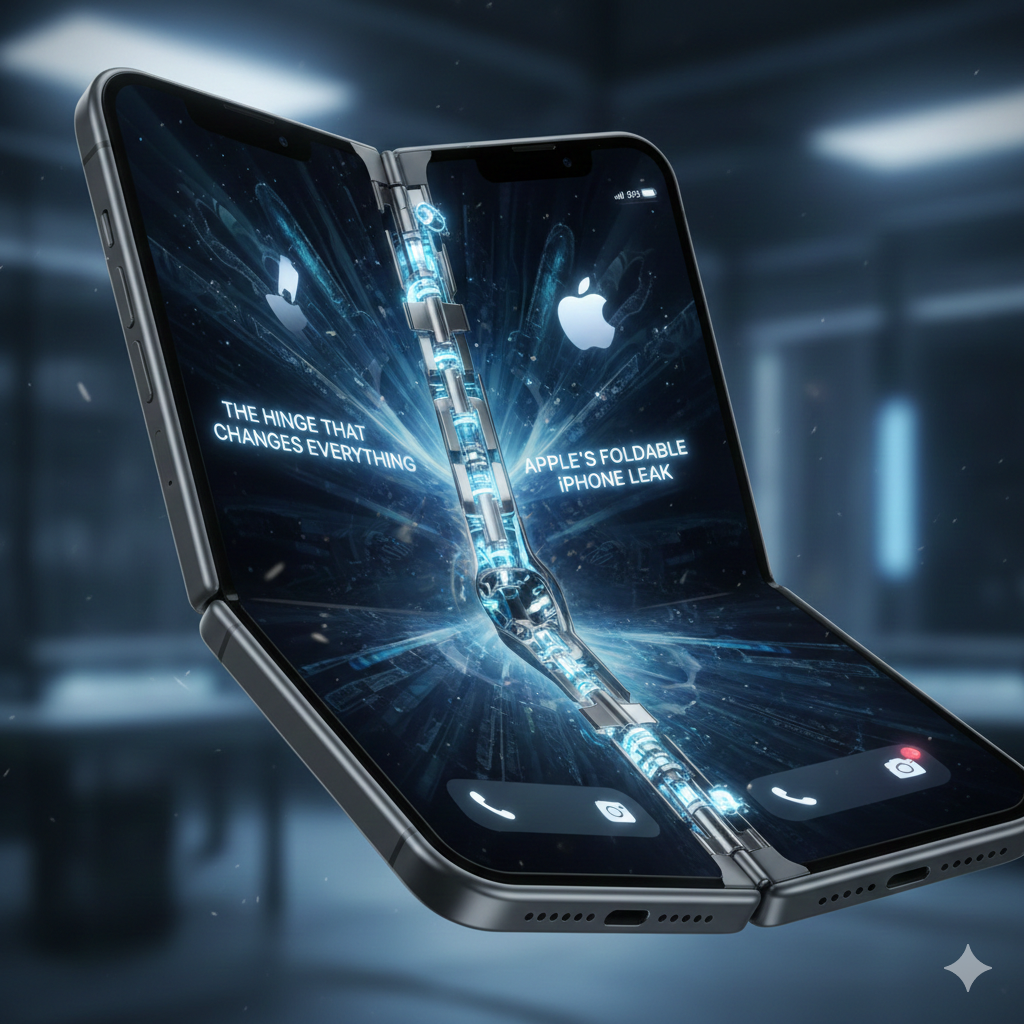
The smartphone industry has spent the last seven years trying to convince us that folding glass is the future. While competitors have iterate through hinges and creases, Apple has remained notably silent—until now. Recent leaks suggest that the tech giant is finally ready to move, and the details of "Project V68" indicate they aren’t just entering the market; they’re trying to fix it.
Apple’s entry into the foldable space isn't merely a response to market pressure; it's a strategic move to stabilize a category that has long been viewed as a niche enthusiast play. By the time the first foldable iPhone likely debuts in late 2026, the technology will have matured enough for Apple to apply its signature "late but better" philosophy. This isn't just another phone; it’s a fundamental restructuring of the global smartphone market.
The Passport Design: A Departure from the Tall and Skinny
Most foldable phones today, like the Samsung Galaxy Z Fold series, opt for a tall, narrow outer display that feels cramped until unfolded. Leaked CAD renderings and schematic drawings suggest Apple is taking a different path. The "iPhone Fold" appears to embrace a wider, "passport-style" silhouette that feels more natural in one hand.
With folded dimensions rumored to be roughly 83.8 mm wide and 120.6 mm tall, the device prioritizes a usable external screen. When opened, it reveals a massive 7.7 to 7.8-inch internal display. This creates a canvas nearly identical in size to an iPad mini, effectively merging two of Apple's most popular product lines into a single, pocketable device.
To maintain the premium feel users expect, Apple is reportedly aiming for an incredibly thin chassis. The open device is said to be merely 4.8 mm thick. To put that in perspective, that is thinner than almost any current smartphone on the market, achieving a level of engineering that makes the transition from phone to tablet feel seamless rather than bulky.
Solving the "Crease" Problem Through Material Science
The "crease" has been the Achilles' heel of foldable technology since its inception in 2019. It is the visual and tactile reminder that the screen is, in fact, a piece of flexible plastic or ultra-thin glass. Apple’s solution, detailed in several recent patents, involves a combination of Liquidmetal hinges and self-heating display substrates.
One of the more fascinating leaks describes a display that can actually heat itself in the area of the fold. This isn't for comfort; it’s for durability. In colder environments, flexible displays become more brittle and prone to cracking. By subtly warming the hinge area, Apple ensures the screen remains pliable and resistant to the mechanical stress of thousands of folds.
Furthermore, the integration of a self-healing screen layer could redefine device longevity. This technology uses a specialized coating that can "flow" back into small scratches or dents over time, potentially using heat or light as a catalyst. It’s a classic Apple move: using complex material science to create a user experience that feels simple and indestructible.
The Power Play: Battery Life That Defies the Form Factor
Foldable devices are notorious for having "adequate" rather than "excellent" battery life because the hinge takes up valuable internal real estate. However, leaks from Weibo sources like Fixed Focus Digital suggest Apple is planning a massive 5,500mAh dual-cell battery for the V68.
This would be the largest battery ever placed in an iPhone, comfortably exceeding the 5,088mAh found in the iPhone 17 Pro Max. Apple is likely leveraging its proprietary C2 modem and 2nm A20 Pro chip—expected to be the most efficient processors ever made—to squeeze every minute of use out of that capacity. The goal is clear: a foldable that doesn't force the user to carry a charger everywhere they go.
A Multitasking Upgrade Powered by iOS 19
A folding screen is only as valuable as the software that utilizes it. Rumors surrounding iOS 19 suggest a major multitasking overhaul that feels like a precursor to the Fold. The most intriguing feature is a "Stage Manager-style" interface that would allow for resizable, overlapping app windows.
Imagine starting a video call on the top half of the screen while taking notes on the bottom half, or dragging and dropping files between three open apps simultaneously. Apple is reportedly working on a custom aspect ratio close to 4:3 for the internal display. This matches the standard iPad layout, ensuring that the millions of apps already optimized for iPad will look and feel at home on the iPhone Fold from day one.
Realistic Challenges: The Price of Perfection
Despite the optimism, Apple faces significant hurdles. The most obvious is the price. Analysts predict the iPhone Fold will launch at a near-$2,000 price point, positioning it as an ultra-premium tier above the Pro Max. This raises a critical question: is the convenience of a foldable worth double the price of a standard flagship?
There is also the matter of the "iPhone Flip." While the book-style V68 is the primary focus, reports from Mark Gurman indicate that a smaller, clamshell-style "Flip" model is also in the works. Apple is essentially hedging its bets, exploring which form factor will truly resonate with the masses before committing its entire roadmap to a single design.
The Final Reveal
The iPhone Fold represents the most ambitious hardware project Apple has undertaken in a decade. It is a device that promises to bridge the gap between high-mobility communication and serious productivity. By addressing the fundamental flaws of early foldables—durability, software optimization, and battery life—Apple is poised to move the category from a curiosity to a standard.
As we move closer to the rumored late 2026 launch, the "One More Thing" moment feels more earned than ever. Whether you view it as a luxury toy or the inevitable evolution of the smartphone, the iPhone Fold is proof that even in a mature market, there is still plenty of room for the future to unfold.