
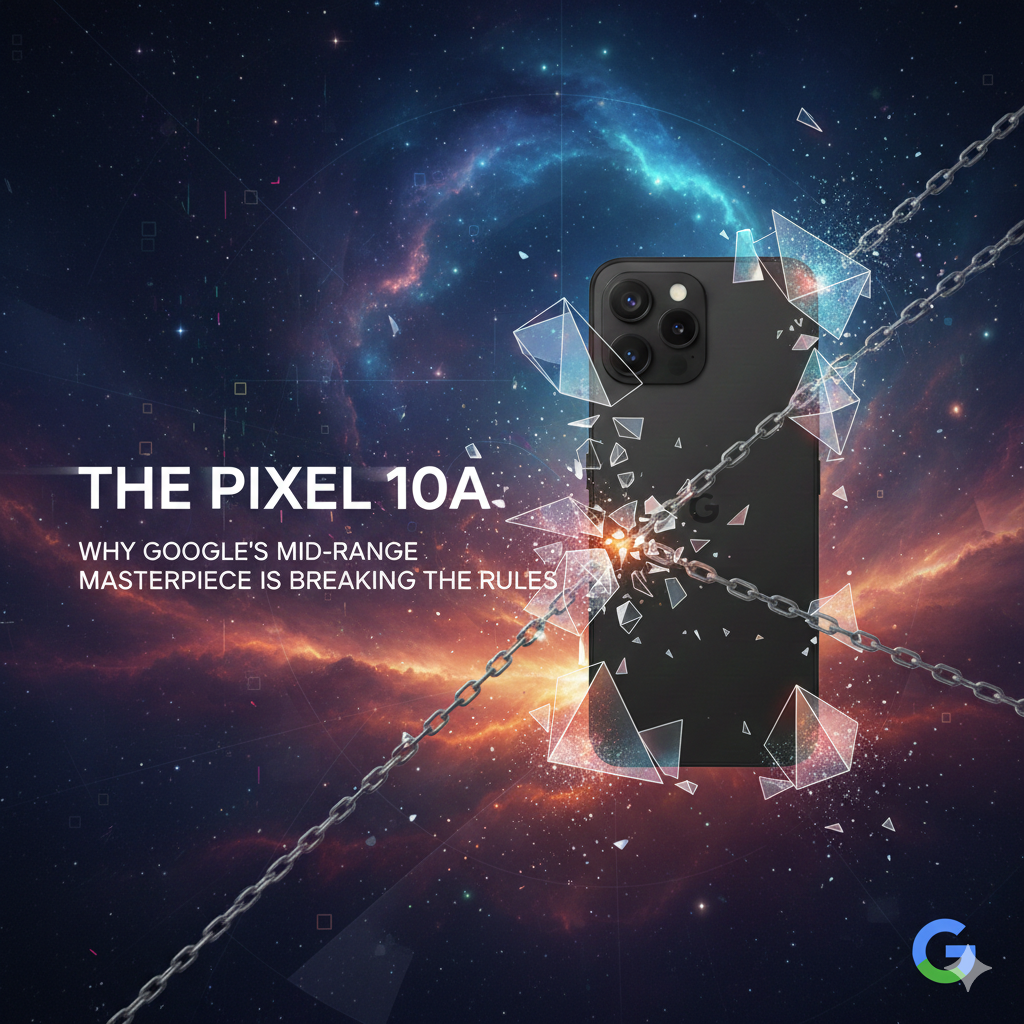
For years, the technology world has operated on a predictable rhythm where Google would wait for the blooming flowers of May to reveal its latest "A-series" smartphone. This year, the script has been flipped entirely, dragging the mid-range champion out of the spring shadows and into the February frost.
The early arrival of the Pixel 10a is more than just a calendar tweak; it is a calculated tactical strike. By moving the pre-order date to February 18, 2026, Google is positioning itself to capture the early-year upgrade cycle that has long been dominated by its rivals.
A New Philosophy of Form
The most immediate change is visible the moment you turn the device over. Google has spent years refining the "camera bar" or "visor" aesthetic, but the Pixel 10a introduces a surprising design twist by flattening the rear array entirely.
While the flagship Pixel 10 features a more pronounced camera housing, the 10a opts for a flush dual-camera setup that sits level with the phone’s back. This choice makes the device feel remarkably slim and pocketable, moving away from the "lip" design seen on the Pixel 8a and 9a.
The material choice continues to lean into high-quality plastics and aluminum frames, balancing durability with a lighter hand-feel. A vibrant new palette including Berry and Lavender offers a splash of personality, ensuring that "budget" does not have to mean "boring."
The Heart of the Machine
The true debate surrounding this device lies beneath the glass. There is a tension in the supply chain reports regarding whether the 10a will inherit the new Tensor G5 chip or stick with a modified version of the Tensor G4.
If Google chooses the Tensor G5, it marks a historic shift as the company moves manufacturing from Samsung to TSMC’s 3nm process. This transition is not just about raw speed; it is about thermal efficiency and battery longevity, addressing two of the most persistent complaints from the Pixel community.
Some analysts suggest that Google might take a more conservative route to keep the price point near the rumored $499 mark. However, even with a refined G4, the integration of on-device AI remains the primary focus of the internal architecture.
Intelligence Without the Effort
Google is increasingly marketing its hardware as a vessel for "Actually Helpful AI." On the Pixel 10a, this manifests most clearly through Magic Cue, a contextual suggestion engine that anticipates your needs based on what is happening on your screen.
Imagine receiving a text about a dinner reservation while you are on a phone call. Magic Cue can automatically surface the restaurant details from your Gmail and place them on your call screen so you aren't fumbling through apps.
This level of integration is supported by Gemini Nano, which allows many of these complex operations to happen on the device rather than in the cloud. It ensures that privacy is maintained while providing the kind of proactive assistance that makes a smartphone feel truly smart.
The Magnetic Evolution
Wireless charging has often been the Achilles' heel of mid-range phones, frequently omitted or relegated to agonizingly slow speeds. The Pixel 10a changes the narrative by fully embracing the Qi2 standard through Google’s "Pixelsnap" technology.
This magnetic array allows the phone to snap perfectly onto chargers and accessories, mirroring the convenience of Apple’s MagSafe ecosystem. It is a turning point for Android accessories, opening the door for a wave of magnetic wallets, car mounts, and battery packs that were previously a flagship-only luxury.
By including this hardware, Google is building an ecosystem that encourages users to stay within the Pixel family. It is a subtle but effective way to increase brand loyalty in a market where consumers often jump between manufacturers based on the best seasonal deal.
Navigating the Competitive Minefield
The Pixel 10a does not exist in a vacuum, and it faces a formidable gauntlet of competitors launching in the same window. The Samsung Galaxy S26 series and the rumored iPhone 17e are both vying for the same "value-premium" crown.
Google’s primary advantage remains its software support and the purity of the Android experience. With a commitment to seven years of OS and security updates, a Pixel 10a purchased in 2026 will still be a modern device in the early 2030s.
There are realistic challenges, however, such as the rising cost of components like DRAM and NAND memory. While Google aims to keep the device accessible, these economic pressures mean that the "A-series" is slowly creeping toward the price bracket once reserved for entry-level flagships.
The Final Verdict on Value
The Pixel 10a represents the maturity of Google’s hardware division, signaling that they are finally ready to compete on their own terms. By moving the launch forward, they are no longer waiting for the market to settle; they are attempting to define it.
While power users may lament the potential reuse of the Tensor G4 in some regions, the combination of the flush design, Qi2 magnets, and Magic Cue AI makes for a compelling package. It is a phone designed for the person who wants the best of Google’s brain without the bulk of a Pro-level price tag.
As we move toward the March release, the Pixel 10a stands as a testament to the idea that a mid-range phone doesn't need to be a collection of compromises. It can be a statement of intent, proving that the most helpful technology is often the most accessible.