
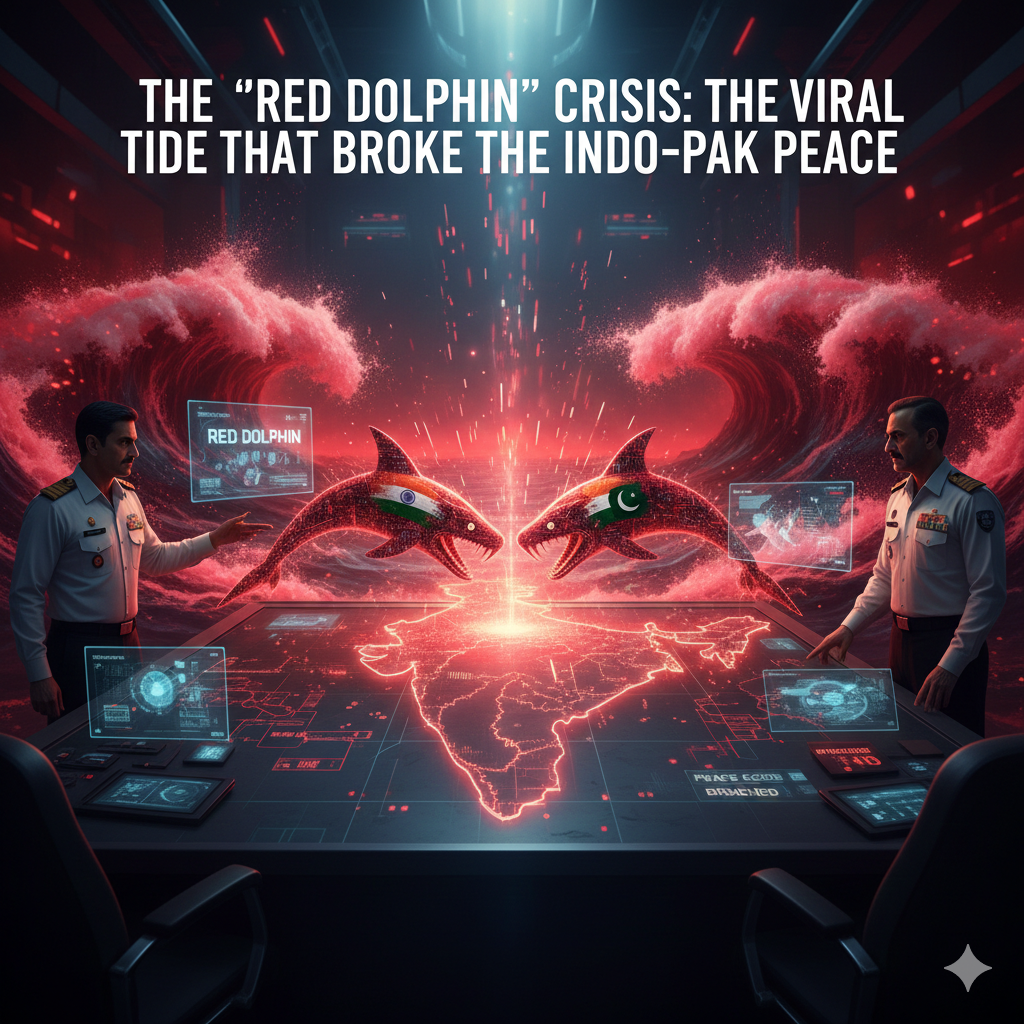
In May 2025, the world watched in horror as two nuclear-armed neighbors teetered on the edge of total war. What started as a cryptic digital subculture known as "Red Dolphin" soon manifested as a terrifying catalyst for the most severe escalation between India and Pakistan in over half a century.
Paragraphs of history books will likely record the military maneuvers, but the digital fingerprints of this crisis tell a more modern, cautionary tale. It is a story of how viral misinformation, when weaponized by algorithmic echo chambers, can drive sovereign nations into a state of "use it or lose it" paranoia.
The Genesis of a Digital Phantom
The "Red Dolphin" trend first appeared on encrypted messaging apps and short-form video platforms as a series of seemingly innocuous challenges. Unlike its predecessor, the "Blue Whale" challenge of the late 2010s, Red Dolphin focused on nationalistic "tests of courage" that blurred the lines between digital activism and physical sabotage.
The trend gained traction by using high-octane, AI-generated visuals of military glory to entice young users into "reporting" troop movements and logistics hubs. By early May, the Stimson Center reported that the volume of geolocated data being leaked by civilians under the #RedDolphin tag had created a tactical nightmare for border security.
The danger wasn't just in the data being shared; it was in the narrative being built. Bad actors utilized these tags to spread hyper-realistic deepfakes of "unprovoked attacks," creating a feedback loop where the public demanded immediate military retaliation for events that simply hadn't happened.
From Pixels to Pavements: The Pahalgam Spark
The crisis reached a breaking point following a devastating terror attack in Pahalgam. While the tragedy was real, the "Red Dolphin" networks immediately flooded the internet with "proof" of state-sponsored involvement, using fabricated communications logs to bypass traditional intelligence verification.
Public pressure in India reached a fever pitch, fueled by an algorithmic bias that favored the most aggressive voices. This digital momentum gave birth to Operation Sindoor, a military response aimed at precision strikes against hardened targets.
The efficiency of India's response was undeniable, yet it was met by a Pakistani military that had been modernized with advanced Chinese hardware. This clash was more than a border skirmish; it was a real-world combat validation of new-age warfare, where Chinese-supplied PL-15E missiles and J-10C fighters faced off against India's Rafale fleet.
The Lesson of the "Four Days in May"
The confrontation lasted only four days, but it exposed deep structural vulnerabilities in how modern states handle "Grey Zone" warfare. We saw how a social media trend could serve as a non-kinetic weapon, confusing command structures and forcing leaders to make split-second decisions based on contaminated information.
Some analysts argue that the crisis was inevitable given the regional history, but others point to the unprecedented role of trade as a war deterrent during the ceasefire negotiations. It was a stark reminder that in the 21st century, the economy and the smartphone are just as influential as the artillery battery.
"The Red Dolphin crisis wasn't a failure of intelligence; it was a failure of digital literacy at a national scale."
Today, as India moves forward with a ₹3.6 lakh crore defence upgrade, the focus has shifted toward technological sovereignty. The procurement of 114 additional Rafale jets and Boeing P-8I surveillance aircraft is as much about monitoring the digital and maritime horizons as it is about air dominance.
Future-Proofing Against the Viral Vanguard
To prevent a repeat of May 2025, the strategy must evolve beyond hardware. We need to treat digital misinformation as a top-tier national security threat, equal to physical incursions.
Key factors in this evolution include the integration of AI-driven verification systems and a more robust "Make in India" approach to software infrastructure. The goal is to ensure that the next time a "Red Dolphin" or its successor surfaces, the response is dictated by verified facts rather than viral frenzies.
The "Four Days in May" served as a wake-up call. We are living in an era where a single hashtag can mobilize an army, and a single deepfake can launch a missile. True sovereignty now depends on our ability to distinguish the signal from the noise before the noise becomes a roar.