
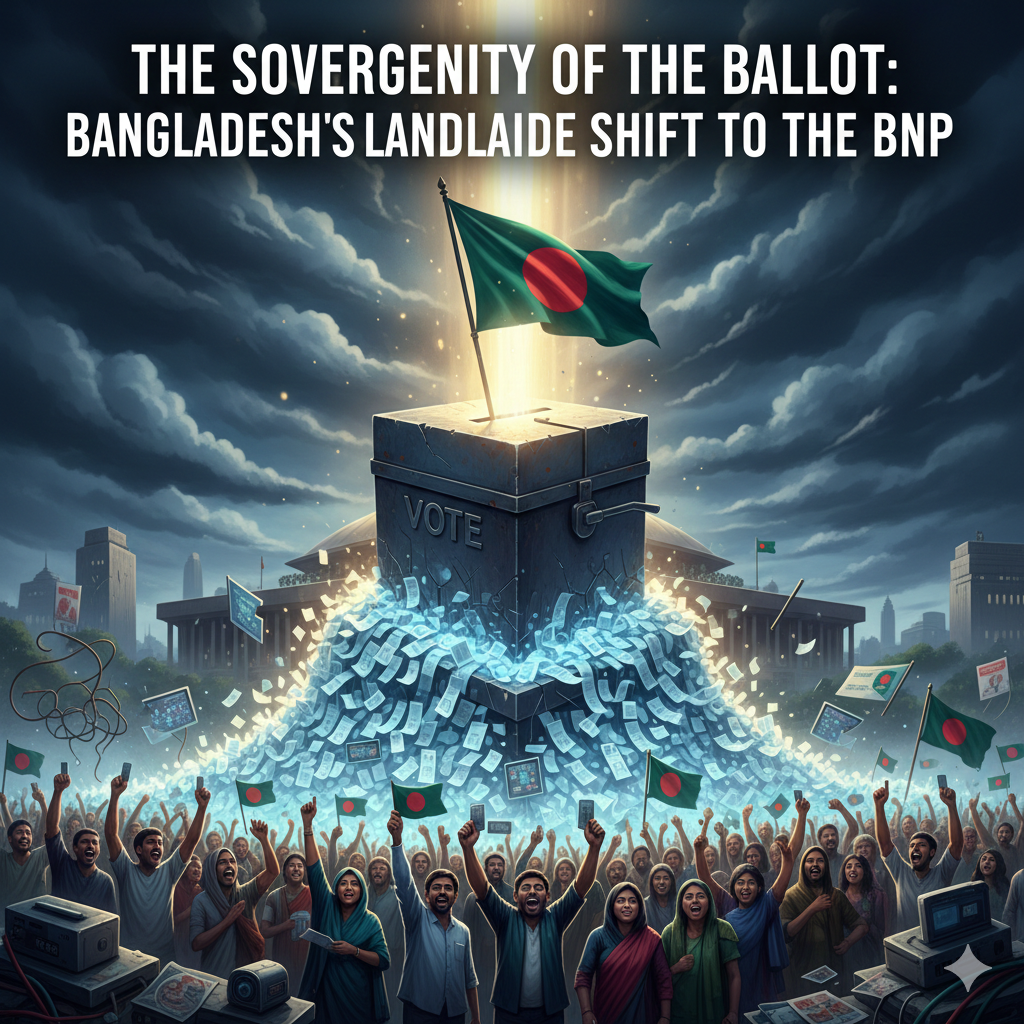
The long queues winding through the streets of Dhaka on February 12, 2026, weren’t just about choosing a prime minister; they were about reclaiming a voice that many felt had been silenced for fifteen years.
As the sun set on the first general election since the July Revolution of 2024, the results signaled more than a political transition—they signaled a total structural overhaul.
The Bangladesh Nationalist Party (BNP), led by the formerly exiled Tarique Rahman, has secured a crushing two-thirds majority, winning 209 out of 300 seats and effectively dismantling the old centralized power structure.
The Weight of the Mandate
This victory is the culmination of eighteen months of painstaking preparation under the interim administration of Nobel laureate Muhammad Yunus.
The mandate is staggering in its clarity, as the BNP outpaced rival alliances and a surge of new "Third Way" parties like the student-led National Citizen Party (NCP).
While the BNP’s return to power after nearly two decades is a historic comeback, it is also a high-stakes gamble on the "Bangladesh First" doctrine—a platform designed to navigate the country toward a trillion-dollar economy.
The sheer scale of the win suggests that voters prioritized stability and the promise of a "clean slate" over the fragmented options offered by the post-revolutionary political landscape.
A Return from Exile
At the heart of this shift is Tarique Rahman, who returned to Bangladesh in late 2025 after 17 years in self-imposed exile in London.
His journey from a political fugitive to the Prime Minister-designate is perhaps the most dramatic arc in South Asian politics this decade.
Rahman has positioned the "New BNP" as a moderate-centrist force, moving away from the more polarized rhetoric of the past to embrace a blueprint for systemic state reform.
His supporters see him as the only leader with the organizational muscle to fill the vacuum left by the fallen Awami League, while his critics remain watchful of whether old habits of patronage will resurface.
The Economic Blueprint: A Trillion-Dollar Dream
The most pressing challenge for the incoming government is an economy that is currently balancing projected 5% growth with persistent inflationary pressures.
The BNP’s "Vision 2026" manifesto includes ambitious social safety nets, such as "Family Cards" providing monthly stipends to marginalized households and "Farmers Cards" for agricultural subsidies.
Rebuilding the ready-made garment (RMG) sector is priority number one, as the industry has faced significant disruption due to recent labor unrest and global trade shifts.
Investors are looking for policy consistency, and the BNP has promised to transition from a low-cost labor model to a higher-value-added economy by investing in technology and skills.
Maintaining the IMF’s structural reform program will be crucial to securing the foreign exchange reserves needed to stabilize the Taka and attract foreign direct investment.
Recalibrating Regional Ties
Geopolitics in Dhaka has shifted overnight, particularly in the delicate relationship between Bangladesh and India.
For years, the previous administration was seen as New Delhi’s closest ally, but the BNP victory forces a pragmatic reassessment of bilateral ties.
Prime Minister Narendra Modi has already congratulated Tarique Rahman, signaling a desire to maintain continuity in trade and regional security.
However, the BNP has signaled it will formally request the extradition of ousted leader Sheikh Hasina to face trial for crimes against humanity, a move that could test the limits of diplomatic patience.
The new government’s "Bangladesh First" stance aims to balance these regional tensions with a renewed focus on sovereignty and mutual respect.
Institutional Reform and the July Charter
Perhaps the most significant aspect of this election wasn’t just who won, but the rules they have agreed to play by.
The concurrent approval of the July National Charter introduces constitutional checks and balances designed to prevent the return of authoritarian rule.
These reforms include structural changes to the judiciary and the electoral commission, aimed at ensuring that future power transitions are as orderly as this one.
The presence of a fully-fledged EU Election Observation Mission—the first since 2008—added a layer of international legitimacy that the country’s previous three polls lacked.
The Road Ahead: Justice or Revenge?
As the BNP prepares to form a government by Sunday, the national mood is a mix of relief and cautious expectation.
The party has promised a "Truth and Healing Commission" to investigate the human rights violations of the previous era, but the line between justice and political retribution is notoriously thin.
Success in this post-2024 era hinges on whether the new administration can build a governance model that outlives its winners.
Bangladesh has proven it can overthrow a regime; now it must prove it can build a lasting, inclusive democracy that honors the spirit of the revolution.