
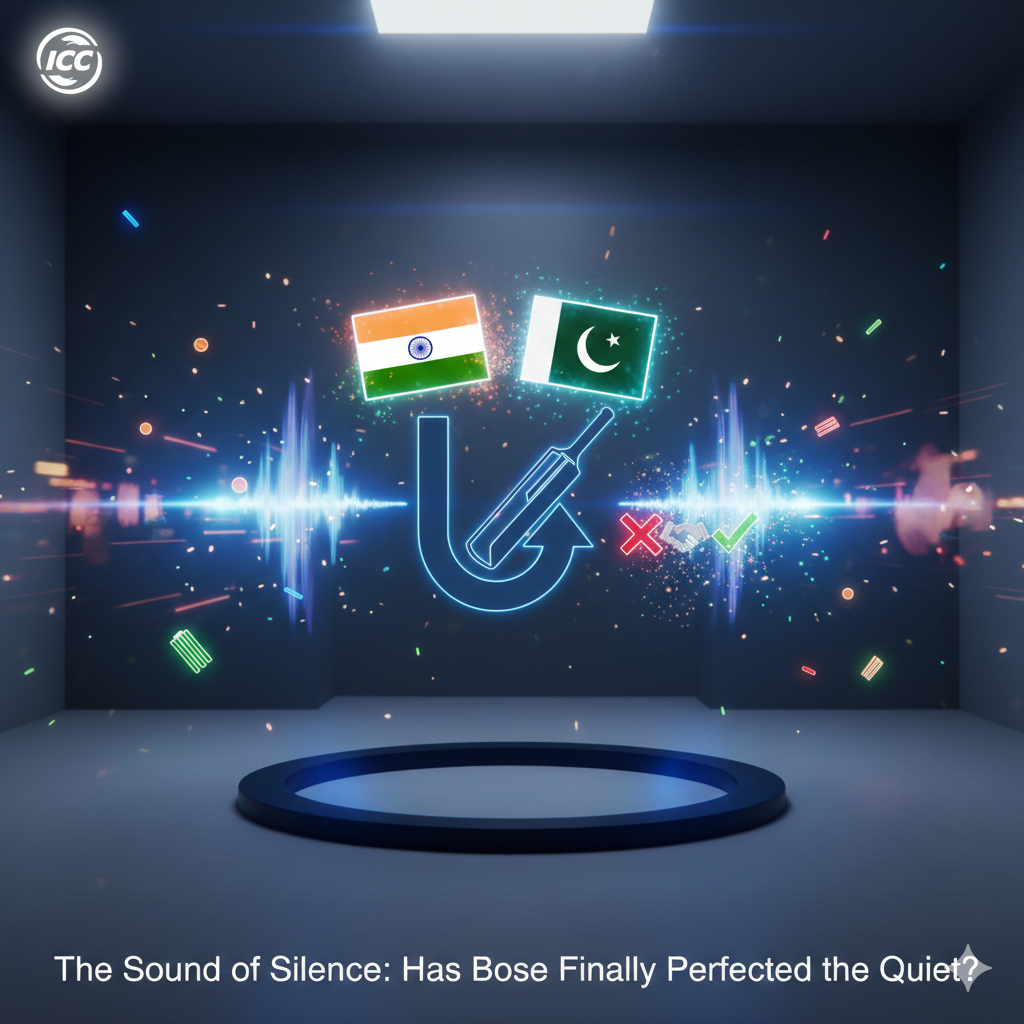
The "Mother of All Matches" was on the brink of extinction. For weeks, the cricketing world held its breath as the Pakistan government issued a directive that seemed final: the national team would not take the field against arch-rivals India on February 15. It wasn't just a sports story; it was a geopolitical game of chicken that threatened to bankrupt the tournament's narrative and its treasury.
Then came the February 9 reversal. In a dramatic midnight U-turn, the Pakistan government directed the Pakistan Cricket Board (PCB) to honor its fixture in Colombo. This wasn't just a change of heart; it was a masterclass in the intersection of sporting pride, diplomatic pressure, and the cold, hard reality of the bottom line.
The Solidarity Standoff
The crisis didn't actually start with Pakistan; it began with the Bangladesh Cricket Board (BCB). Citing profound safety concerns, Bangladesh refused to tour India for the T20 World Cup, leading the ICC to replace them with Scotland in Group C.
Pakistan’s PCB, led by Chairman Mohsin Naqvi, saw this as an opportunity to draw a line in the sand. To express solidarity with their "neighbors," Pakistan announced a selective boycott, stating they would play their other matches but skip the marquee clash against India. It was a bold move designed to challenge the ICC’s perceived bias toward India’s hosting rights and security protocols.
However, the moral foundation of this boycott was always on shaky ground. Critics argued that the PCB was using the Bangladesh situation as a proxy for its own long-standing grievances regarding the "Hybrid Model" of tournaments and India's refusal to tour Pakistan. As legendary cricketer Sunil Gavaskar noted early on, it was a bluff that few expected to hold.
The $174 Million Reality Check
Principles are expensive, and in the world of modern cricket, the price of boycotting India is almost prohibitive. Analysts estimated that if the February 15 clash in Colombo were cancelled, the cumulative loss would have been staggering.
Some key factors included an estimated $174 million in lost revenue for the ICC, encompassing broadcasting rights, gate receipts, and sponsorship withdrawals. Broadcasters, who pay billions for the rights to these tournaments, reportedly put immense pressure on the ICC to resolve the deadlock, as an India-Pakistan game often accounts for a massive percentage of their total viewership and ad revenue.
"The cumulative loss would have been around $174 million dollars... including those related to broadcasters, gate money and other sponsorships." — Internal ICC Source.
Beyond the immediate cash flow, there was the threat of long-term sanctions. The ICC has the power to withhold revenue shares and impose bans on member nations that fail to honor their participation agreements. For a board like the PCB, which relies heavily on ICC distributions to fund its domestic structure, the prospect of being "cut off" was a financial death sentence.
The Diplomatic Outreach
The resolution wasn't solely about money; it was about a frantic, six-hour diplomatic mission in Lahore. ICC Deputy Chair Imran Khawaja and BCB President Aminul Islam Bulbul flew to Pakistan to meet with PCB officials and government representatives.
The turning point occurred when the ICC offered "sops" to Bangladesh to de-escalate the tension. By assuring Bangladesh that no penalties would be imposed for their refusal to play in India and promising them future hosting rights for a global event before 2031, the ICC effectively removed the "solidarity" rug from under Pakistan’s feet.
The Sri Lankan Intervention
Sri Lanka, as a co-host, also played a crucial role. With Colombo set to host the match at the R. Premadasa Stadium, the Sri Lankan board sent a heartfelt appeal to Pakistan. They reminded their "brothers" of the historical support they had shared during difficult times and pointed out that a boycott would devastate the local economy and the success of the tournament they were working so hard to stage.
Anticipating the Blockbuster in Colombo
Now that the dust has settled, the focus shifts back to the 22 yards. The match, scheduled for February 15, has already sent the travel industry into a frenzy. Within minutes of the U-turn announcement, flight prices for the Mumbai-Colombo-Mumbai route surged by over Rs 10,000.
Security is also being dialed up to unprecedented levels. Sri Lankan police have deployed over 1,500 officers and 600 traffic personnel specifically for the Colombo matches. Elite units are on high alert, ensuring that the geopolitical tensions that nearly derailed the match don't spill over into the stands.
While fans are relieved, the reaction within Pakistan remains mixed. Former captain Shahid Afridi expressed his frustration with the backdown, suggesting that the decision was a surrender to commercial interests over national principles. Yet, for the average fan, the prospect of seeing Suryakumar Yadav face off against Shaheen Afridi is a victory for the sport itself.
The saga of the 2026 T20 World Cup boycott reversal proves that while cricket is often used as a political tool, it is also bound by the gravity of global economics. Pakistan’s U-turn wasn’t a sign of weakness so much as a recognition of reality: in the modern game, no rivalry—however heated—can afford to ignore the hand that feeds it. On February 15, when the first ball is bowled in Colombo, the political drama will fade, replaced by the roar of a crowd that almost didn't get to see the game they love.