Papers
Browse the full research library.
Ten papers per page, with summaries, diagrams, formulas, concepts and citations kept close to the source.
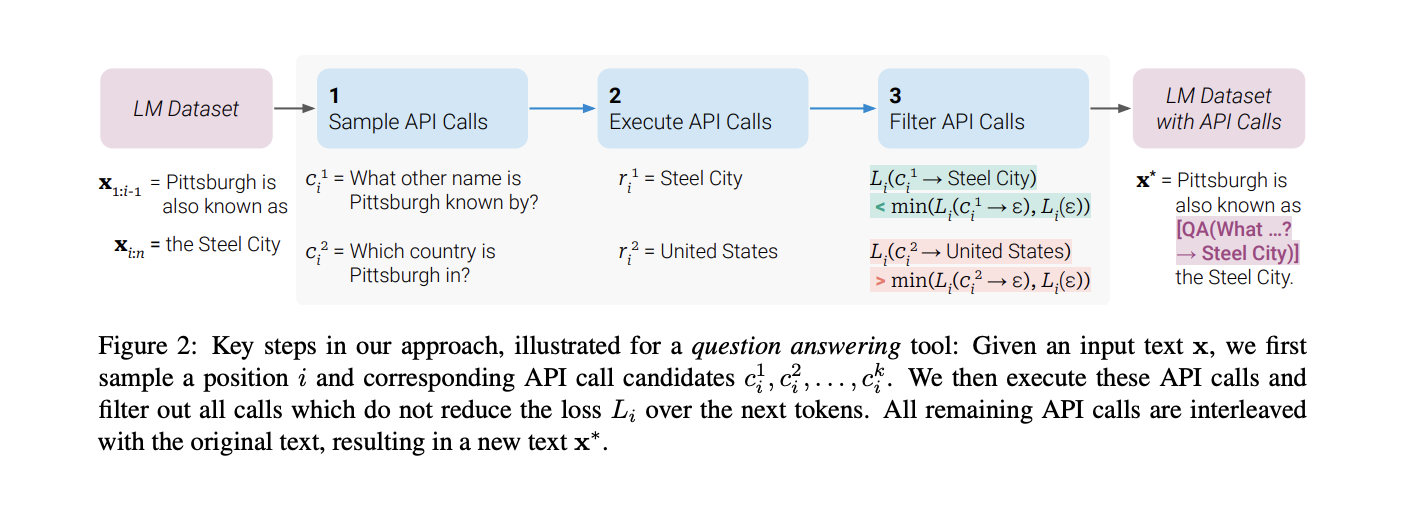
Toolformer: Language Models Can Teach Themselves to Use Tools
Toolformer: Language Models Can Teach Themselves to Use Tools: Tool calling.
Read this paper to understand tool calling in LLM-agent design.
Timo Schick
Read paper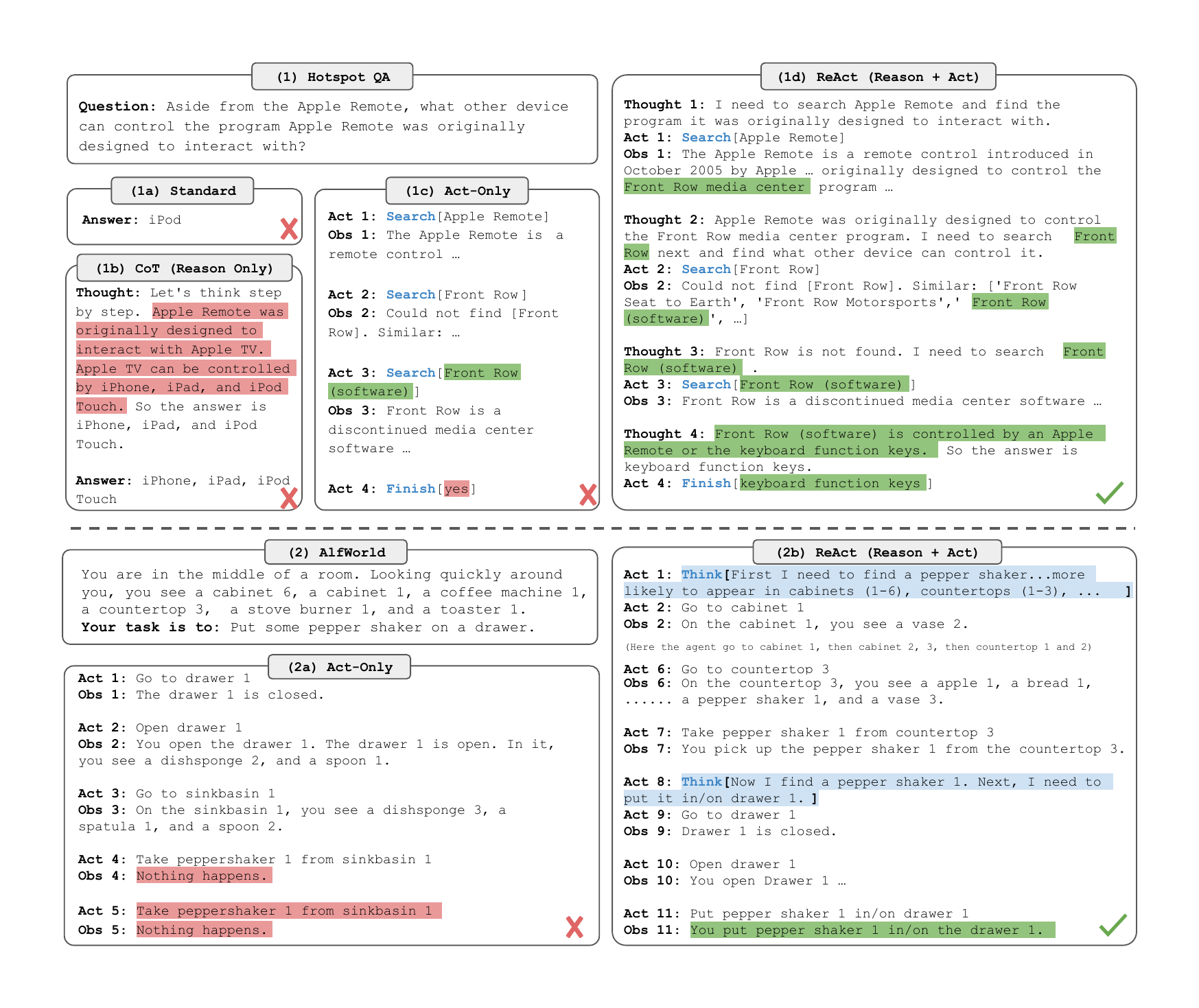
ReAct
ReAct: the foundational Reason → Act → Observe agent loop.
Read this paper to understand the basic control loop behind modern tool-using agents.
Shunyu Yao
Read paper
Claude Sonnet 5.5
Anthropic’s Claude Sonnet 5.5 targets the middle ground between high-end reasoning and production economics.
A practical technical overview of Sonnet 5.5 for engineers building coding agents, RAG systems, tool-using workflows, and enterprise AI applications.
Anthropic
Read paper
RAFT
Fine-tunes an LLM for domain-specific RAG so it learns to identify and use relevant retrieved documents while ignoring distractors.
RAFT shows that RAG quality can improve not only by changing retrieval but also by training the generator to reason correctly over imperfect retrieved context.
Tianjun Zhang, Shishir G. Patil, Naman Jain
Read paper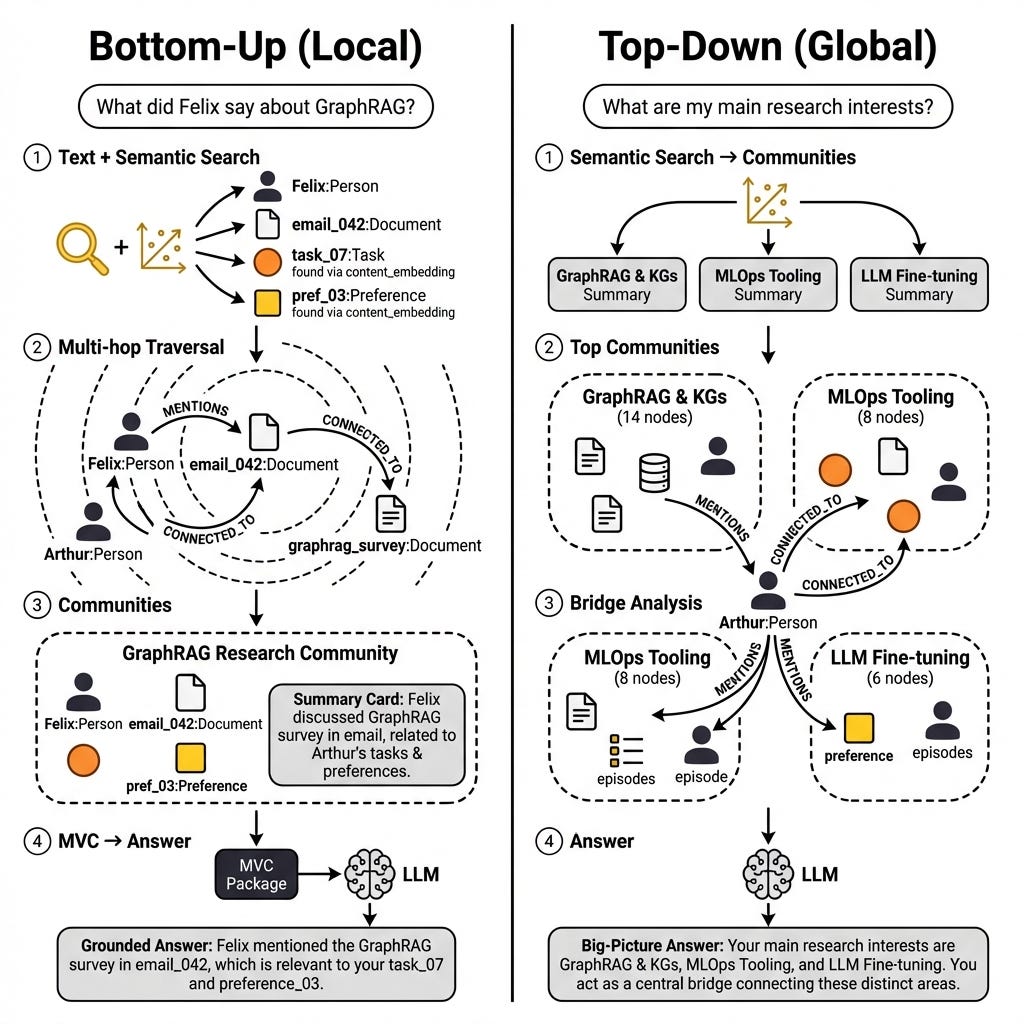
From Local to Global
Introduces GraphRAG, which uses entity graphs and community summaries to answer global questions that flat chunk retrieval struggles with.
GraphRAG extends RAG from local fact retrieval toward corpus-level sensemaking and query-focused summarization.
Darren Edge, Ha Trinh, Newman Cheng
Read paper
Corrective Retrieval Augmented Generation
Adds a retrieval-quality evaluator and corrective actions to make RAG robust when the initial retrieval is poor.
CRAG explicitly treats retrieval failure as a first-class problem and adds a correction layer instead of assuming the top-k results are reliable.
Shi-Qi Yan, Jia-Chen Gu, Yun Zhu
Read paper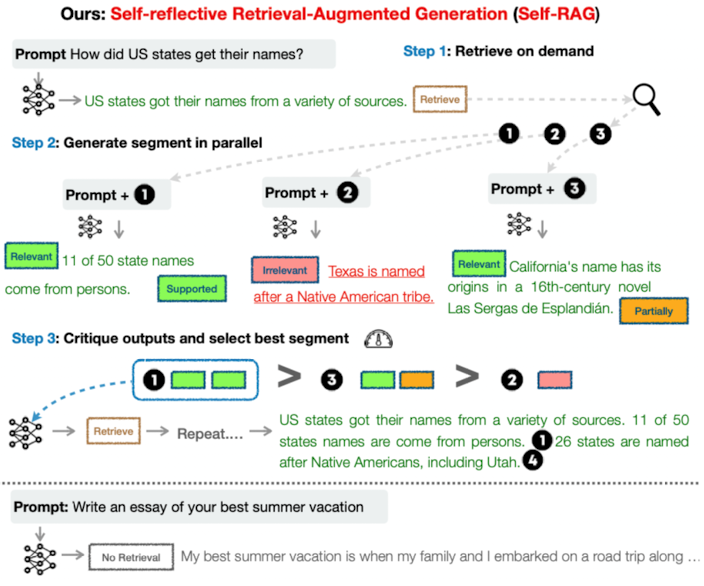
Self-RAG
Introduces adaptive retrieval plus self-reflection tokens so a model can decide when to retrieve and critique its own evidence and generations.
Self-RAG moves RAG toward learned, controllable retrieval and generation instead of blindly attaching a fixed number of retrieved passages to every query.
Akari Asai, Zeqiu Wu, Yizhong Wang
Read paper
RAPTOR
Builds a hierarchical retrieval tree by recursively clustering and summarizing document chunks for multi-level retrieval.
RAPTOR addresses a core weakness of flat chunk retrieval: losing global context when answering questions that require information distributed across long documents.
Parth Sarthi, Salman Abdullah, Aditi Tuli
Read paper
Interleaving Retrieval with Chain-of-Thought Reasoning for Knowledge-Intensive Multi-Step Questions
Combines iterative retrieval with chain-of-thought reasoning so each reasoning step can drive the next evidence search.
IRCoT shows why one-shot retrieval is insufficient for multi-hop questions whose evidence needs are revealed progressively during reasoning.
Harsh Trivedi, Niranjan Balasubramanian, Tushar Khot
Read paper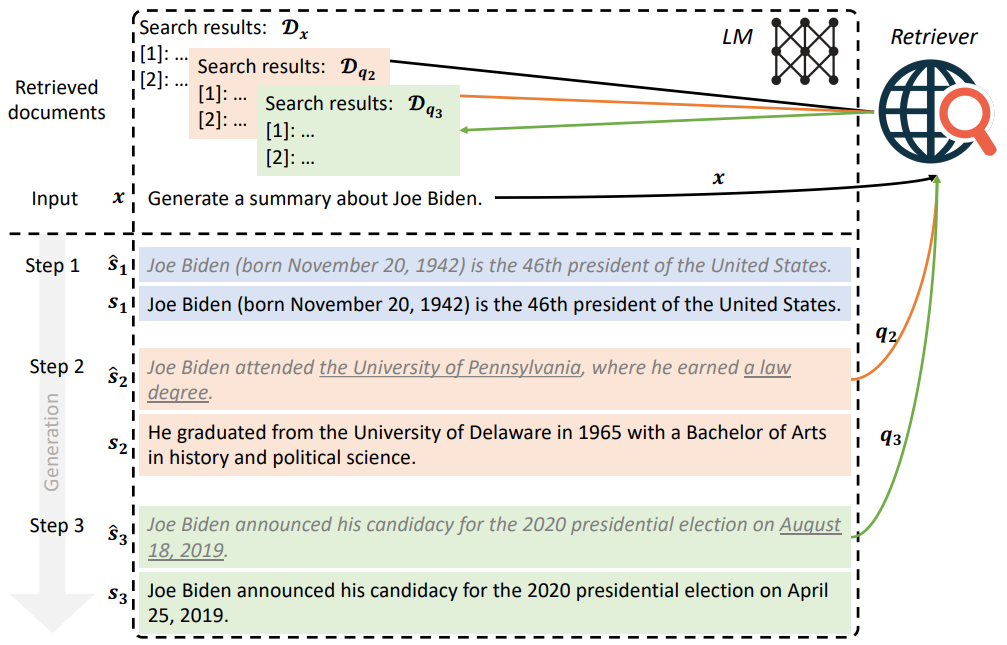
Active Retrieval Augmented Generation
Introduces active retrieval that dynamically decides when and what to retrieve while generating long-form answers.
FLARE moves RAG from a single retrieve-then-generate step toward an iterative generation-and-retrieval loop.
Zhengbao Jiang, Frank F. Xu, Luyu Gao
Read paper