OpenAI Decisions
OpenAI Decisions is OpenAI's dedicated high-throughput decision-making API powered by GPT-6 Luna, accessed via the POST /v1/decisions endpoint. Designed for agent routing, automated content moderation, and classification, it processes typed questions (predicates, categorical choices, and rubric scores) roughly 10x faster than standard generation, billed at $0.10 per million input tokens with zero output-token fees.
128k
~96k words input
$0.1 / $0
Prompt / Completion per 1M
82 ms
Decision Latency
Cloud Managed
Zero local VRAM
Holistic Capability Distribution
Normalized 0-100 rating vectors balanced across intelligence, throughput, and economics.
Verified LLM Benchmarks
Empirical evaluations across academic reasoning, software engineering, agentic execution, and human preference.
OpenAI Decisions Empirical Results & Generational Scaling
Verified release visuals published by Inception Labs comparing Mercury 3 against GPT-6 Luna and Claude Haiku 5.5.
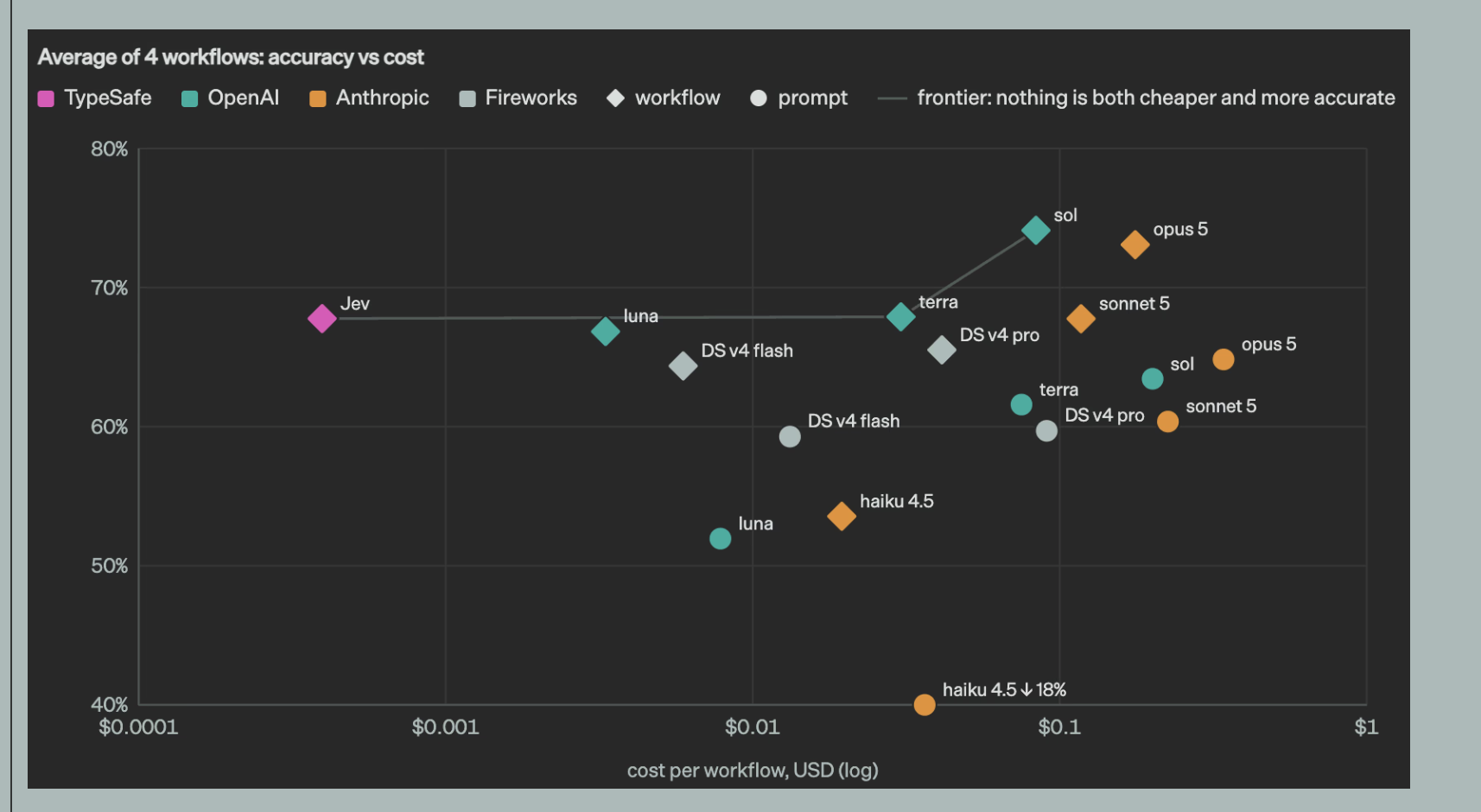
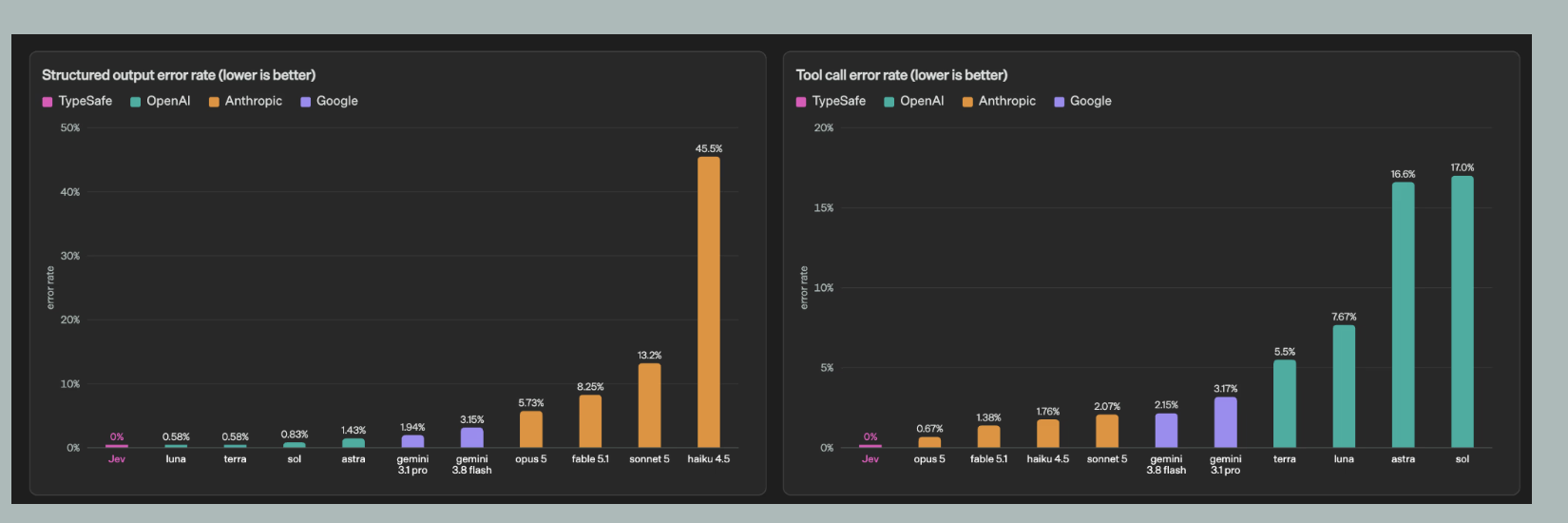
Inference Latency & Generation Throughput
Empirical telemetry benchmarking generation throughput (Tokens/Second) and Time to First Token (TTFT).
Measured under concurrent production load
p95 latency: 160 ms
Across 50,000 monitored requests
Architectural Strengths vs. Operational Considerations
An objective technical balance sheet analyzing deployment advantages and production constraints.
Key Architectural Strengths
- Native multimodal context evaluation: inspects text and image documents together against typed question schemas.
- Powered by GPT-6 Luna world intelligence with specialized non-autoregressive decision classification heads.
- Zero output token billing: only input tokens are billed ($0.10 / 1M), yielding up to 92% cost reduction compared to chat completions.
- Operating up to 10x faster than standard generation (~80ms latency) for high-velocity agent execution loops.
- Calibrated probabilities for predicates (0.0 to 1.0) and normalized categorical distributions.
Operational Considerations
- Accessible exclusively via POST /v1/decisions; does not generate free-form text or conversational replies.
- Requires explicit structured schema definitions for each question (predicate, choice, or score).
Hardware & Execution Parameters
Genealogical Provenance
Dedicated fast decision interface built on GPT-6 Luna, announced at OpenAI DevDay 2026.
openai gpt 6 luna
OpenAI Decisions
Architecture Engineering & Capability Deep-Dive
Topology & Attention Mechanics
The Decisions API leverages GPT-6 Luna with a specialized decision-head topology that bypasses autoregressive token emission. When a request is received at /v1/decisions, the input context is encoded once, and all specified questions (predicates, choices, and scores) are evaluated concurrently against the final layer representations.
Evaluation Profile & Reasoning Capabilities
Combines GPT-6 Luna's world knowledge with calibrated softmax outputs, yielding precise probabilities between 0.0 and 1.0 for predicates, normalized choice distributions, and weighted rubric ratings.
Inference Economics & Cost Optimization
Eliminates token output charges entirely. Processing 1,000 tickets with a 500-token input costs just $0.05 total.
Primary Production Workloads & Suitability
Cloud Deployment Architecture & Hardware Sizing
Cloud Deployment Architecture
Distributed enterprise serving infrastructure, autoscaling semantics, and runtime execution profile.
Proprietary commercial model hosted on managed multi-region clusters with automatic autoscaling, high availability, and prompt prefix caching.
Multi-Tenant Cloud API
Continuous autoscaling with regional failover
0 GB Local VRAM
Inference executed on hyperscaler accelerator clusters
128k tokens
Supported with automated KV cache prefix compression
SDK Installation
Official Repositories & Papers
Compare Showdowns
OpenAI Decisions vs Jev AI
Compare OpenAI Decisions against Jev AI's verified benchmarks, context window, and pricing.
OpenAI Decisions vs Mercury 3
Compare OpenAI Decisions against Mercury 3's verified benchmarks, context window, and pricing.
OpenAI Decisions vs GPT-6 Luna
Compare OpenAI Decisions against GPT-6 Luna's verified benchmarks, context window, and pricing.
OpenAI Decisions vs GPT-3.5 Turbo
Compare OpenAI Decisions against GPT-3.5 Turbo's verified benchmarks, context window, and pricing.
Commercial Token Rates & Cost Estimator
$0.10 / 1M
Standard prompt context ingestion
$0.00 / 1M
Generated completion & thinking tokens
$0.03 / 1M
Re-used prompt prefix context
Monthly Production Cost Simulator
$10.50
Includes prompt caching
-$4.50
Saved via prefix context caching
Comparable Foundation Architectures
Alternative foundation models with comparable intelligence benchmarks, context windows, and deployment profiles.
Jev AI
Jev is TypeSafe AI's breakthrough non-autoregressive System One decision model. Rather than generating conversational prose, Jev evaluates state payloads (JSON or text) against explicit typed questions—including binary condition probabilities (noul), categorical choices, and multi-tier rubric scores—in parallel, returning calibrated probabilistic judgments at $0.042 per million input tokens with zero output token fees.
Mercury 3
Mercury 3 is Inception's frontier diffusion large language model (dLLM) co-founded by Stanford Professor Stefano Ermon, delivering an unprecedented 1,068 tokens per second inference speed via parallel denoising across a native 1-million-token context window.
GPT-6 Luna
Ultra-fast low-latency frontier model in the GPT-6 generation, streaming at 130+ tps across a 1-million-token context window at $0.20/$0.80 economics.
GPT-3.5 Turbo
OpenAI's foundational conversational model that launched the ChatGPT era, optimized for fast dialogue, summary generation, and lightweight JSON tasks.
SDK Installation & API Integration
import OpenAI from "openai";

const client = new OpenAI({
  apiKey: process.env.OPENAI_API_KEY,
});

// Calling the dedicated /v1/decisions endpoint
const response = await fetch("https://api.openai.com/v1/decisions", {
  method: "POST",
  headers: {
    "Authorization": `Bearer ${process.env.OPENAI_API_KEY}`,
    "Content-Type": "application/json",
  },
  body: JSON.stringify({
    model: "gpt-6-luna",
    input: "Customer message: 'I love your product, but the checkout page failed twice.'",
    questions: [
      {
        type: "predicate",
        name: "is_complaint",
        instructions: "Is this message reporting an error or expressing frustration?"
      },
      {
        type: "choice",
        name: "category",
        choices: ["billing_checkout", "product_feedback", "account_access"]
      },
      {
        type: "score",
        name: "churn_risk",
        scale: [1, 5],
        instructions: "Assess churn risk from 1 (unlikely) to 5 (imminent)"
      }
    ]
  }),
});

const data = await response.json();
console.log(data.answers);Frequently Asked Questions about OpenAI Decisions
Engineering specifications, VRAM sizing, commercial licensing terms, token economics, and empirical benchmark evaluations.
Announced at OpenAI DevDay 2026 and released in public beta in October 2026, the Decisions API (POST /v1/decisions) is an OpenAI interface powered by GPT-6 Luna that returns typed, structured judgments rather than free-form text. It runs ~10x faster than standard chat completions.
OpenAI Decisions supports three question types: 'predicate' (evaluates a condition and returns a probability from 0.0 to 1.0), 'choice' (selects an option from a developer-defined set of values), and 'score' (evaluates an input against an ordered rubric scale).